Can you use denture cleaner on retainers?
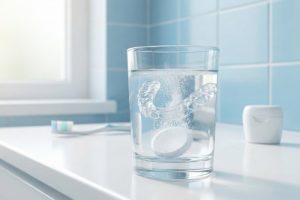
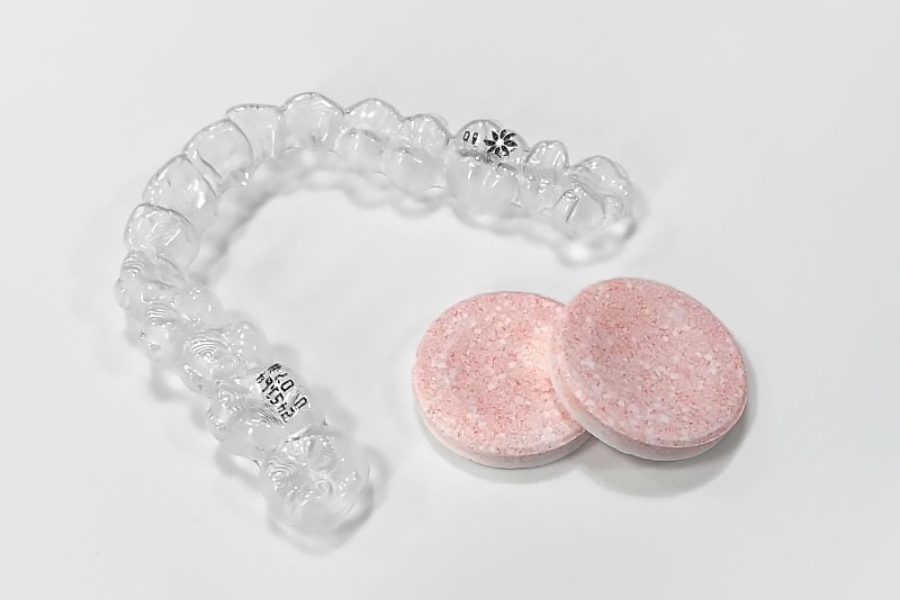
Yes, you can physically use them, but most dental professionals advise against using denture cleaner tablets on retainers regularly because the abrasive chemicals can damage the delicate plastic and cause permanent cloudiness. While you might be tempted to drop your aligners into an effervescent soak for a quick fix, understanding the difference between rigid denture acrylic and soft retainer material is crucial for avoiding costly replacements. Here is the deal: denture cleaner tablets are designed for porcelain, not the porous medical-grade plastic sitting in your mouth right now.
1. What ingredients are in denture cleaner tablets?
The primary active ingredients in denture cleaner tablets are strong oxidizing agents like sodium persulfate and sodium perborate, which are excellent for bleaching artificial teeth but too harsh for clear aligners.
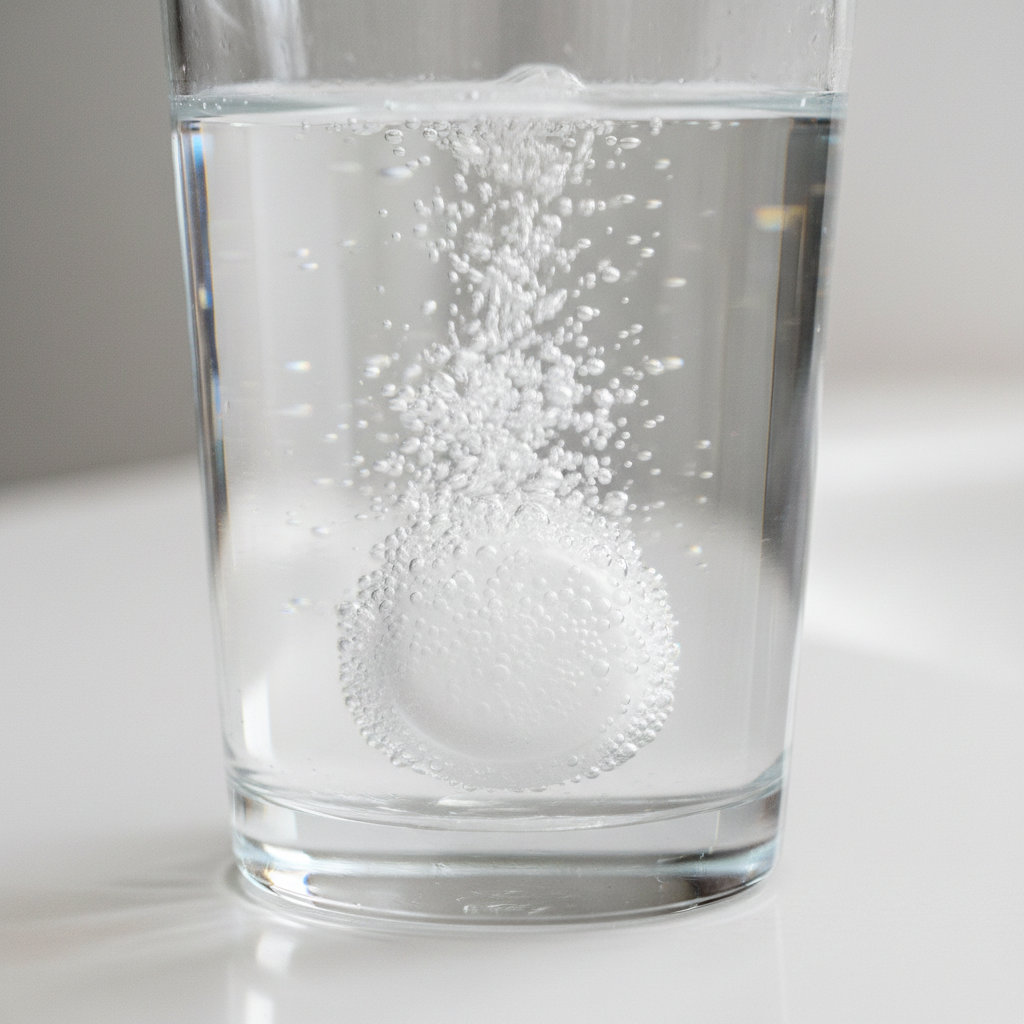
You might be wondering, why are these ingredients considered risky? These chemicals are formulated to scrub microscopic pores in hard acrylic, yet when applied to softer plastic, they strip away the smooth outer layer. This chemical aggression leaves the material vulnerable to further damage and bacterial accumulation.
Why persulfates are a problem
Persulfates are powerful allergens and cleaning agents that can cause gum irritation or allergic reactions if not rinsed perfectly.
- Chemical Burn Risk: Residual persulfates can irritate soft oral tissues.
- Corrosion: They can corrode metal solder points on Hawley retainers.
- Plastic Degradation: Repeated exposure weakens the structural integrity of clear trays.
What’s the real story? Manufacturers rarely warn you about this cross-incompatibility on the box.
Which ingredients should you avoid?
Identifying safe versus harmful ingredients is the first step in protecting your investment.
- Bleach (Sodium Hypochlorite): Causes yellowing and brittleness.
- Abrasives (Silica): Creates micro-scratches that trap plaque.
- Alcohol: Dries out plastic, leading to cracks.
Key Takeaway: Understanding the chemical composition of your cleaner is vital because standard denture products contain harsh oxidizers that degrade retainer plastic over time.
| Ingredient | Function | Risk to Retainer | |
|---|---|---|---|
| Persulfates | Oxidation/Bleaching | High (Corrosion/Allergy) | |
| Sodium Bicarbonate | Effervescence | Low (Safe in moderation) | |
| Sodium Hypochlorite | Bleaching | High (Yellowing) | |
| Citric Acid | Stain Removal | Medium (Etching potential) |
Most commercial tablets rely on persulfates, making them chemically aggressive toward soft orthodontic appliances.
2. Do denture cleaner tablets damage soft retainers?
Yes, denture cleaner tablets frequently damage soft retainers like Invisalign or Essix trays by creating microscopic surface abrasions that ruin the device’s clarity.
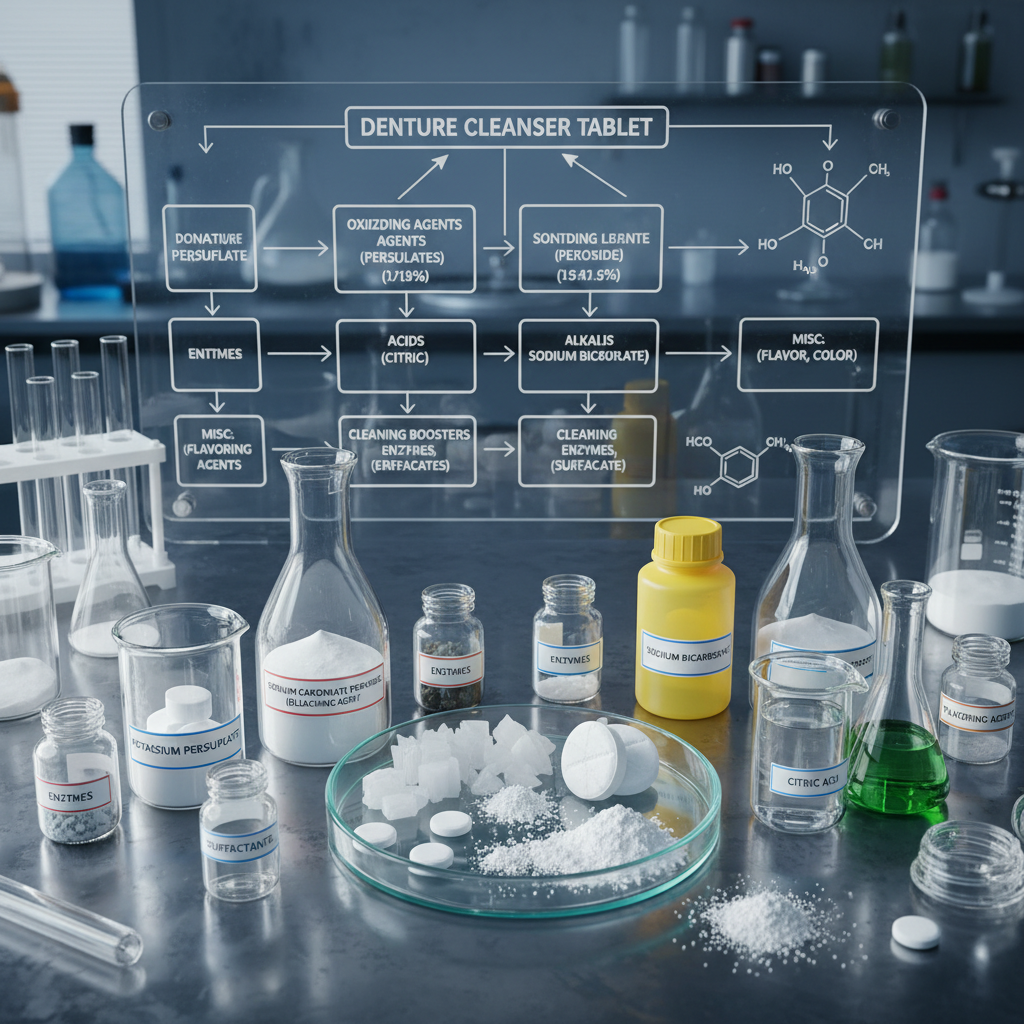
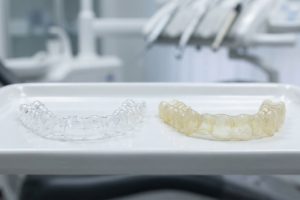
But here’s the kicker: the damage isn’t just cosmetic; it compromises the hygiene of the appliance. Soft retainers are made from a thermoplastic material that is far more porous than denture acrylic, meaning it absorbs chemicals like a sponge.
The mechanism of plastic degradation
When you soak a soft retainer in a harsh solution, the chemical bonds in the plastic begin to break down.
- Micro-scratching: Abrasive particles scour the surface.
- Leaching: Plasticizers leach out, making the tray brittle.
- Warping: Chemical reactions can alter the precise fit of the tray.
It turns out that a loose retainer cannot effectively hold your teeth in position.
Vulnerability of different materials
Not all retainers react the same way, but soft plastics are universally more susceptible.
- Essix Retainers: Highly prone to clouding and cracking.
- Vivera Retainers: Can lose transparency rapidly.
- Hawley Retainers: Acrylic parts are safer, but wire solder is at risk.
Key Takeaway: Soft retainers are fundamentally incompatible with harsh denture cleaner tablets because the porous material absorbs abrasive chemicals, leading to structural failure.
| Retainer Type | Material Hardness | Damage Risk | |
|---|---|---|---|
| Essix (Clear) | Soft/Flexible | Very High | |
| Invisalign | Soft/Flexible | Very High | |
| Hawley | Hard Acrylic/Metal | Medium | |
| Fixed (Bonded) | Metal Wire | N/A (Not removable) |
Soft plastics absorb chemicals faster than hard acrylics, accelerating the degradation process significantly.
3. Will denture cleaner tablets stain your appliance?
Ironically, denture cleaner tablets often cause the very staining they are meant to prevent, leaving clear retainers with a permanent cloudy or yellow tint.
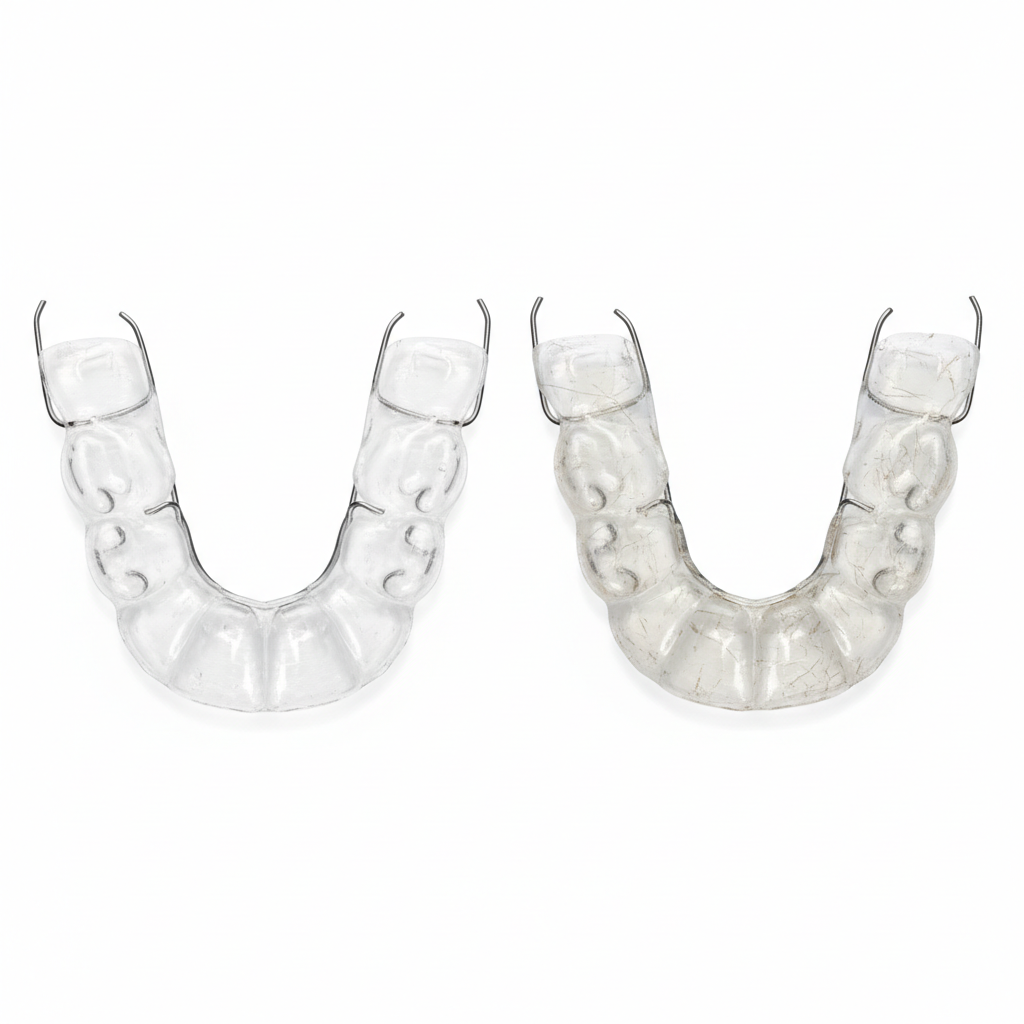
Think about it: you wear clear aligners to be invisible, so a yellowed tray completely defeats the purpose. This discoloration is not a stain sitting on the surface but a chemical change within the plastic itself, often referred to as “bleach burn.”
Causes of chemical discoloration
The oxidation process that whitens dentures often has the reverse effect on clear thermoplastics.
- Oxidation: Turns clear plastic opaque or white.
- Dye Absorption: Blue or green dyes in tablets can stain porous plastic.
- Heat Reaction: Warm water intensifies the staining effect.
Ready for the good part? You can avoid this entirely by skipping the denture aisle.
Is the damage reversible?
Once your retainer has turned cloudy from chemical exposure, there is usually no way to fix it.
- Polishing: Rarely restores original clarity.
- Bleaching: Will only degrade the plastic further.
- Replacement: Often the only viable solution.
Key Takeaway: Using denture cleaner tablets typically results in irreversible cosmetic damage, turning invisible retainers into noticeable, discolored appliances.
| Factor | Effect on Clarity | Reversibility | |
|---|---|---|---|
| Chlorine Bleach | Yellowing | None | |
| Blue Tablet Dye | Green/Blue Tint | Low | |
| Hot Water Soak | Milky/Cloudy | None | |
| Abrasive Scrub | Dull/Matte Finish | None |
Chemical burns penetrate the plastic matrix, making surface polishing ineffective for restoring clarity.
4. Do denture cleaner tablets remove all bacteria?
While denture cleaner tablets have antibacterial properties, they may fail to sanitize retainers effectively if they create micro-scratches where bacteria can hide and multiply.
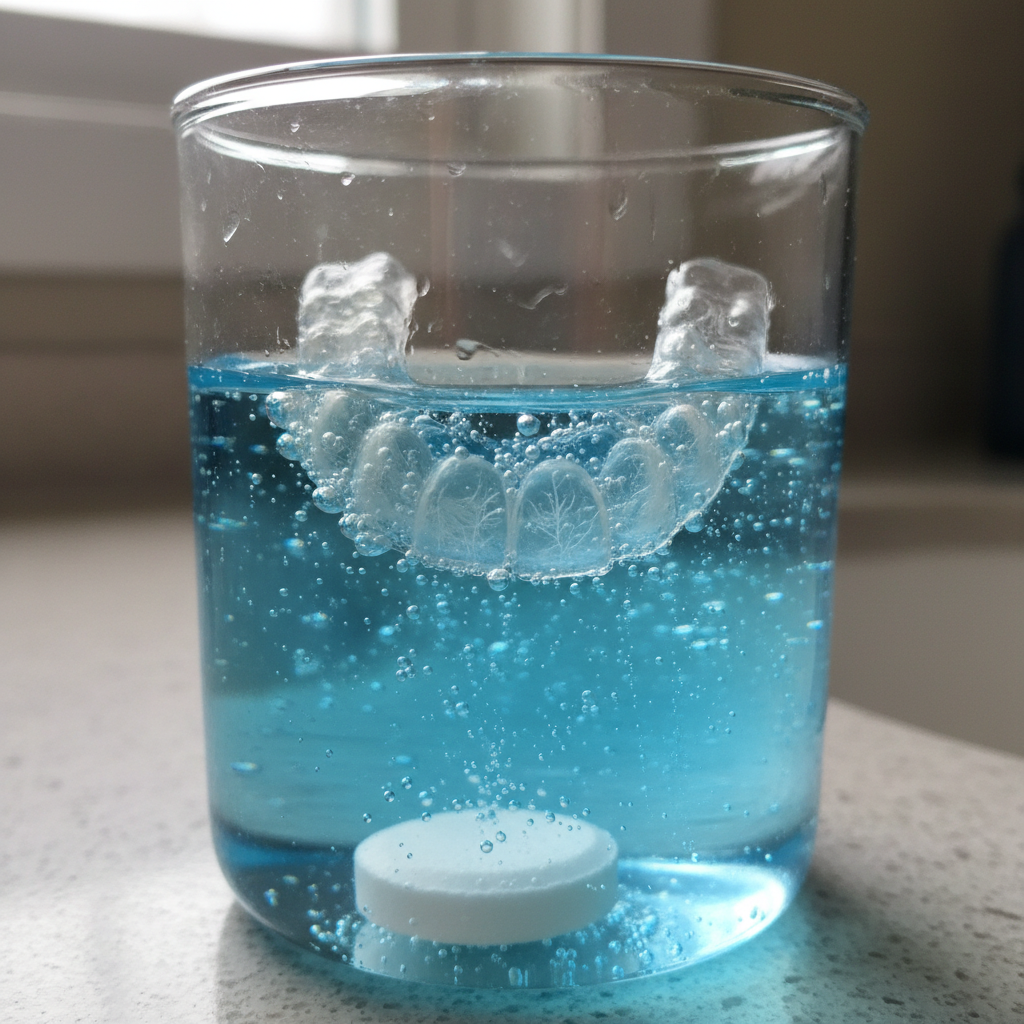
Here is the kicker: a scratched retainer creates a perfect habitat for biofilm that simple soaking cannot reach. The rough surface protects colonies of bacteria from the cleaning solution, leading to persistent bad breath and a higher risk of cavities.
The hidden danger of biofilm
Biofilm is a glue-like layer of bacteria that adheres stubbornly to rough surfaces.
- Protection: Scratches shield bacteria from chemical agents.
- Regrowth: Bacteria repopulate faster on rough surfaces.
- Odor: Trapped bacteria produce sulfur compounds (bad breath).
You might not know that a smooth surface is your best defense against plaque.
Effectiveness vs. long-term hygiene
Short-term bacterial kill rates might be high, but long-term hygiene suffers due to surface damage.
- Initial Soak: Kills surface bacteria effectively.
- Post-Damage: Increases surface area for bacterial colonization.
- Cycle of Dirt: Requires harsher cleaning to remove new buildup.
Key Takeaway: Although denture cleaner tablets kill bacteria on contact, the surface damage they cause eventually makes the retainer harder to clean and more prone to bacterial buildup.
| Surface Condition | Bacteria Retention | Cleaning Difficulty | |
|---|---|---|---|
| Smooth (New) | Low | Easy | |
| Micro-scratched | High | Moderate | |
| Deep Scratched | Very High | Difficult | |
| Porous/Degraded | Extreme | Impossible |
A compromised surface texture negates the antibacterial benefits of the soaking solution over time.
5. Can you use partial denture cleaner tablets?
Even “partial” denture cleaner tablets are formulated for metal and rigid acrylics, making them too harsh for the majority of modern thermoplastic retainers.
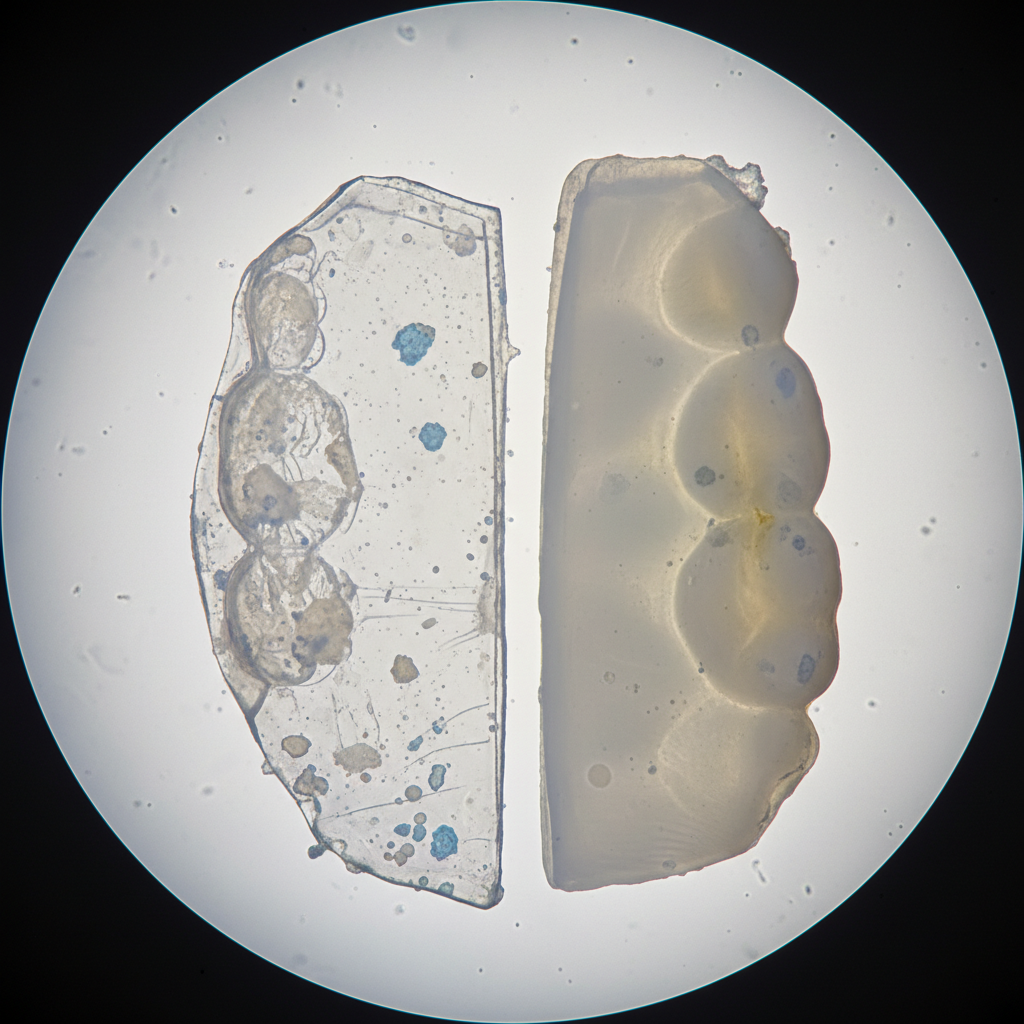
What’s the catch? The term “partial” refers to partial dentures, which often have metal clasps, so these tablets contain anti-corrosive agents but still rely on abrasive oxidizers. They are not designed for the soft, flexible polymers used in Invisalign or Essix retainers.
The marketing myth
Don’t be fooled by the “gentler” branding of partial cleaners; check the chemical list.
- Similar pH: Often just as alkaline as full denture cleaners.
- Bleach Content: Still present in many formulas.
- Material Mismatch: Designed for metal/acrylic, not copolyester.
This is where it gets interesting: using a product meant for metal can warp your plastic.
When might they be safe?
There are very limited scenarios where these might be acceptable.
- Hawley Retainers: The metal parts are compatible.
- Hard Acrylic: Can withstand occasional use.
- Emergency: One-time use is unlikely to destroy a tray.
Key Takeaway: Partial denture cleaner tablets are still fundamentally mismatched for clear retainers, posing similar risks of abrasion and chemical degradation as standard tablets.
| Cleaner Type | Target Material | Retainer Safety | |
|---|---|---|---|
| Full Denture | Porcelain/Acrylic | Unsafe | |
| Partial Denture | Metal/Acrylic | Unsafe (for clear) | |
| Retainer Tablet | Copolyester/Plastic | Safe | |
| Mild Soap | All Materials | Safe |
The target material for partial cleaners is rigid and heat-resistant, unlike delicate orthodontic plastics.
6. How frequent should denture cleaner tablets be used?
If you choose to use denture cleaner tablets despite the risks, they should be restricted to an emergency measure used no more than once a month.
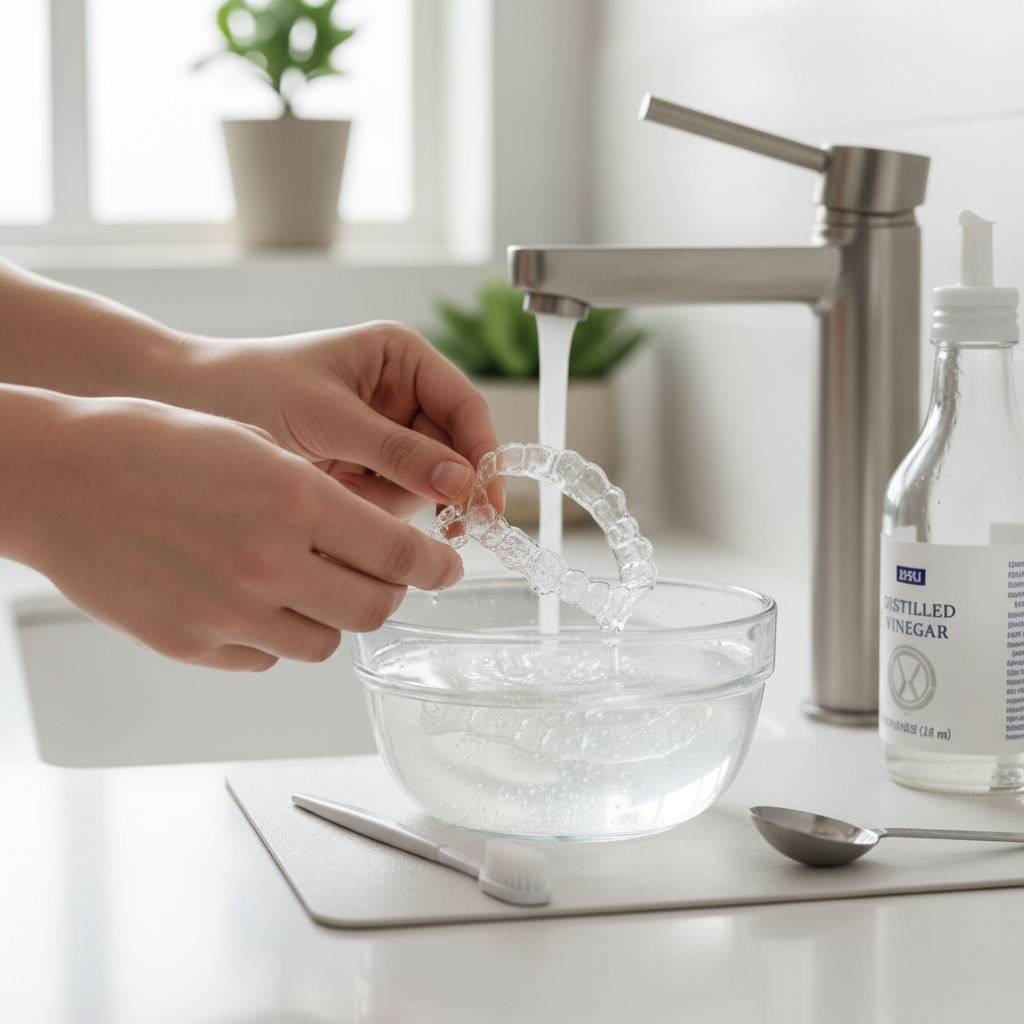
Bottom line: Daily use of these tablets will destroy your retainer’s clarity and fit within weeks. The cumulative effect of chemical exposure creates a “toxic sponge” effect, where the plastic absorbs chemicals that can later leech back into your mouth.
The danger of daily soaking
Routine exposure accelerates the aging process of the plastic significantly.
- Brittleness: Plastic snaps easily under pressure.
- Fogging: Clear trays turn white rapidly.
- Fit Issues: Slight warping affects tooth movement retention.
You need to know that patience is key; a quick soak isn’t worth a ruined smile.
Establishing a safe routine
Focus on gentle daily habits rather than harsh chemical soaks.
- Daily: Brush with water and mild soap.
- Weekly: Vinegar or hydrogen peroxide soak.
- Monthly: Dedicated retainer tablet (if needed).
Key Takeaway: Limiting denture cleaner tablets to rare occasions minimizes damage, whereas daily use guarantees premature failure of your orthodontic appliance.
| Frequency | Damage Risk | Clarity Loss | |
|---|---|---|---|
| Daily | Severe | High | |
| Weekly | Moderate | Medium | |
| Monthly | Low | Low | |
| Never | None | None |
Frequency is the compounding factor; occasional exposure is manageable, but habitual use is destructive.
7. What alternatives exist to denture cleaner tablets?
There are several superior alternatives to denture cleaner tablets that effectively sanitize your retainer without the risk of abrasion or chemical burns.
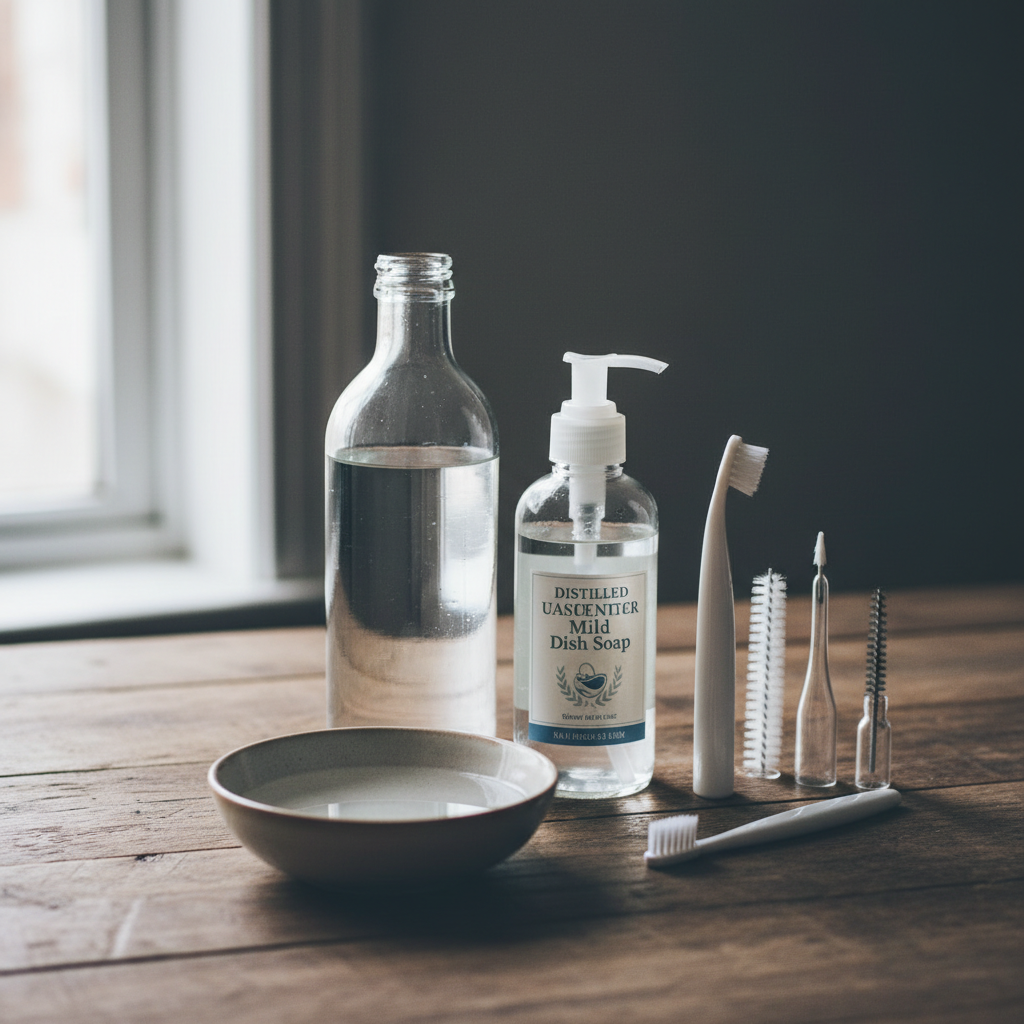
Ready for the solution? Ultrasonic cleaners and pH-balanced foams are the gold standard for modern retainer care. These devices use high-frequency sound waves to dislodge plaque from microscopic crevices that brushes and tablets miss, all while using nothing but water or a mild cleaning solution.
Ultrasonic Cleaners
This technology offers the deepest clean with the lowest risk of physical damage.
- Cavitation: Micro-bubbles implode to blast away dirt.
- Chemical-Free: Cleans effectively with just water.
- Speed: Cycles often take less than 5 minutes.
Gentle Liquid Soaps
Simple household items can be surprisingly effective.
- Castile Soap: Mild, organic, and non-abrasive.
- Dish Soap: effective at cutting grease and biofilm.
- Retainer Foams: Specifically balanced for oral plastics.
Key Takeaway: Switching to ultrasonic cleaners or mild soaps eliminates the risks associated with denture cleaner tablets, providing a safer and often more effective clean.
| Method | Abrasiveness | Cost | Effectiveness | |
|---|---|---|---|---|
| Ultrasonic Pod | None | High (Initial) | Excellent | |
| Castile Soap | None | Low | Good | |
| Retainer Foam | None | Medium | Very Good | |
| Denture Tablet | High | Low | Good (Risky) |
Ultrasonic technology provides a physical clean that chemicals cannot replicate without damaging the material.
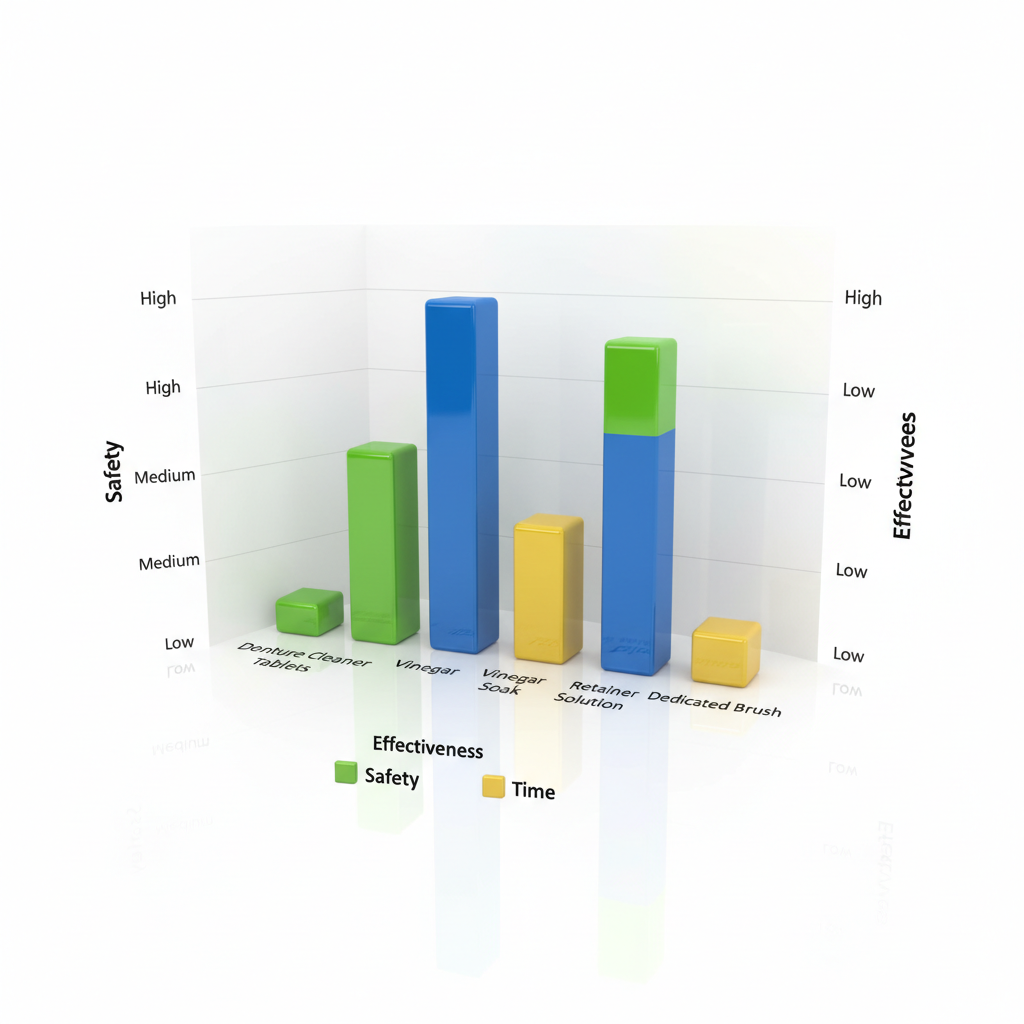
8. What is the process for using denture cleaner tablets?
If you are in a pinch and must use denture cleaner tablets, following a strict protocol is essential to mitigate immediate damage to your retainer.
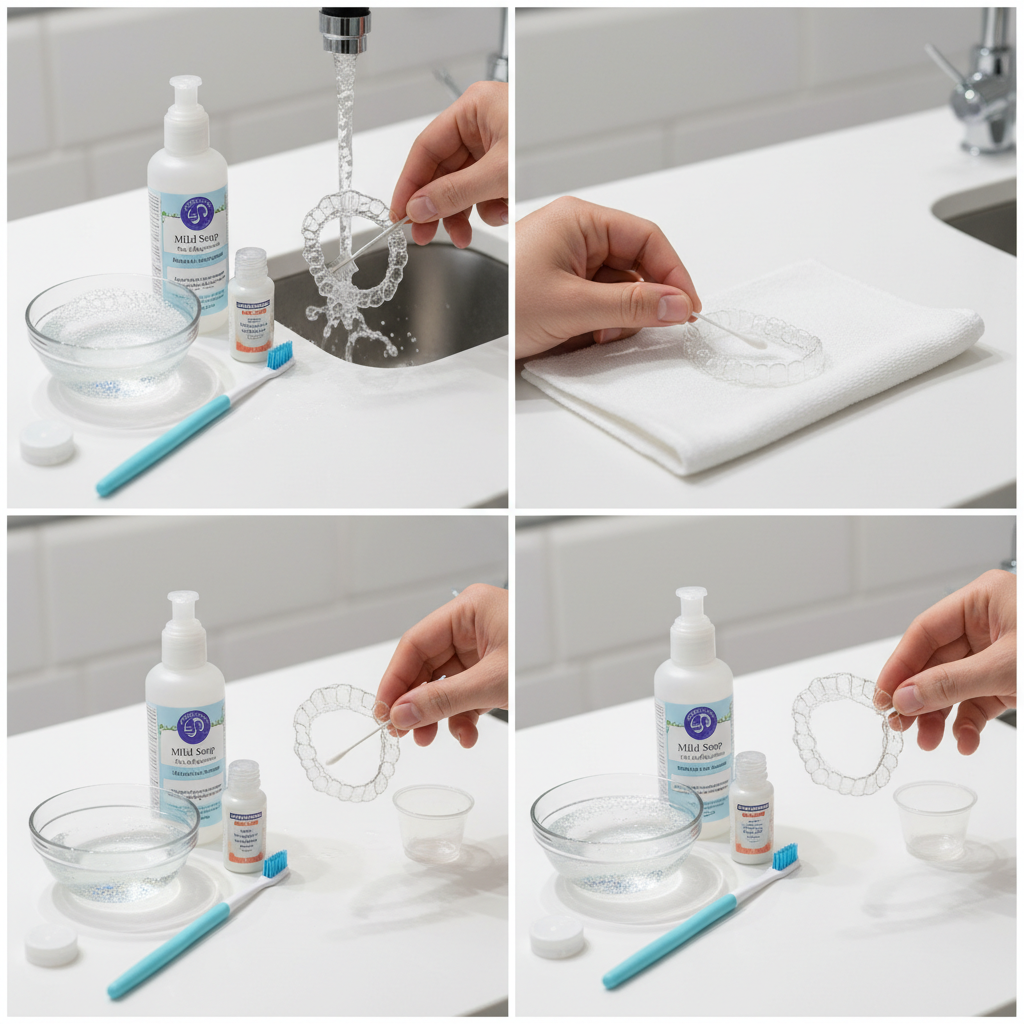
Listen closely: The temperature of the water is just as critical as the chemical itself. Never use hot water, as the combination of heat and harsh chemicals will warp the plastic instantly, rendering the retainer useless.
Step-by-Step Safety Guide
Follow these precise steps to minimize risk.
- Step 1: Dissolve the tablet fully in lukewarm water before adding the retainer.
- Step 2: Soak for exactly the time listed (usually 3-5 mins)—never overnight.
- Step 3: Rinse thoroughly with cool running water for at least 60 seconds.
- Step 4: Gently brush with a soft-bristle brush to remove loosened debris.
Don’t forget: Leaving residue on the retainer can burn your gums.
Why timing matters
Prolonged exposure increases chemical absorption.
- Flash Soak: <5 minutes limits chemical penetration.
- Overnight: Guarantees plastic degradation.
- Rinsing: Removes the “chemical taste” and potential allergens.
Key Takeaway: Strict adherence to time limits and water temperature is the only way to use denture cleaner tablets without causing immediate catastrophic damage to your retainer.
| Step | Action | Precaution | |
|---|---|---|---|
| Dissolve | Lukewarm Water | No hot water! | |
| Soak | 3-5 Minutes | No overnight soaking | |
| Rinse | Cool Water | Remove all residue | |
| Dry | Air Dry | No heat sources |
Control over time and temperature is your primary defense against chemical warping and clouding.
9. How does storage impact denture cleaner tablets use?
Proper storage habits can reduce the need for harsh chemicals like denture cleaner tablets by preventing bacterial overgrowth in the first place.
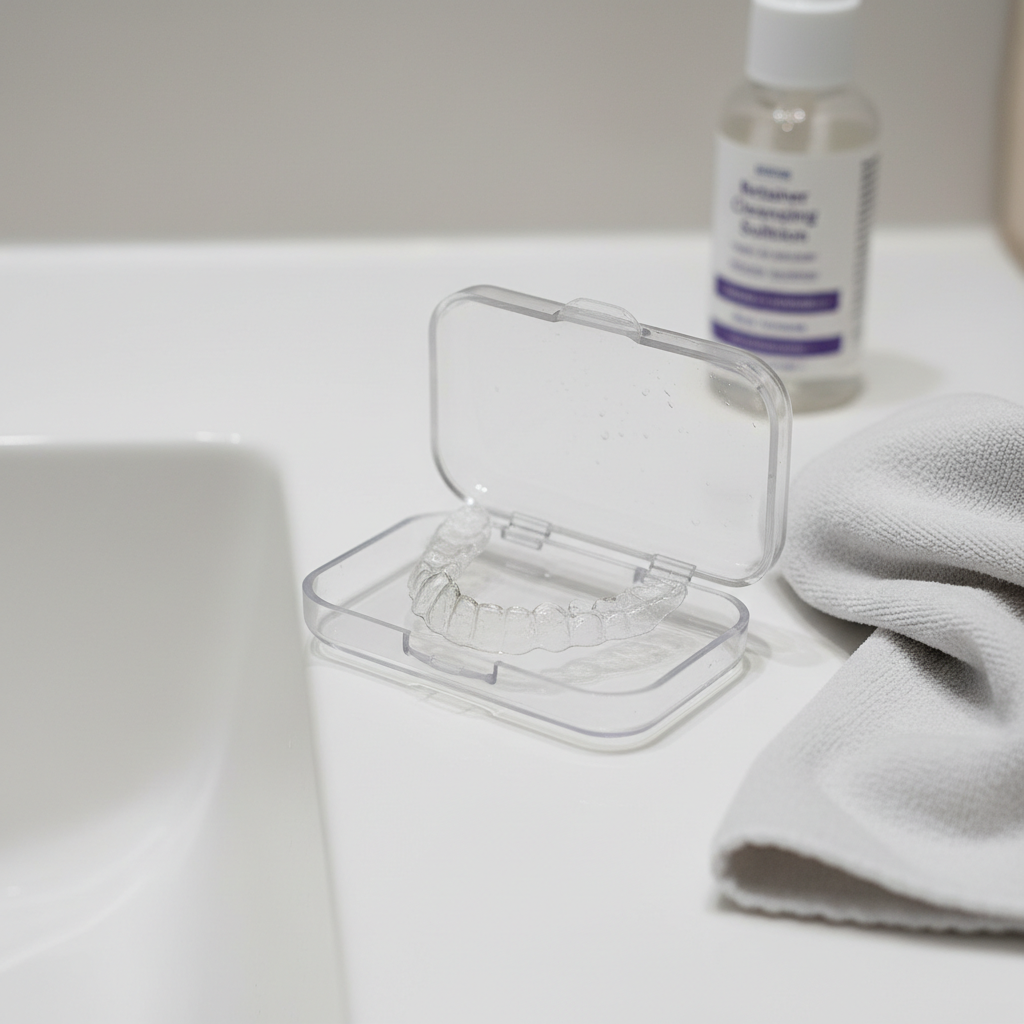
Here’s the secret: Bacteria thrive in moist, dark environments. If you toss a wet retainer into a closed case, you are creating a petri dish that will require strong chemicals to sanitize later. Keeping your case and retainer dry is half the battle.
The “Dry Dock” method
Ensuring your retainer is dry before storage prevents mold and plaque.
- Ventilation: Use a case with air holes.
- Pat Dry: Use a clean towel after rinsing.
- Case Cleaning: Wash your case daily with soap and water.
You might be wondering, does the case really matter? A dirty case reinfects a clean retainer instantly.
Reducing chemical dependency
Good storage means less deep cleaning is required.
- Less Biofilm: Dry environments inhibit growth.
- Less Odor: Prevents the “swampy” smell.
- Longer Life: Less chemical exposure preserves the plastic.
Key Takeaway: optimizing your storage routine reduces the bacterial load, thereby decreasing your reliance on harsh denture cleaner tablets for deep cleaning.
| Storage Habit | Bacterial Growth | Cleaning Need | |
|---|---|---|---|
| Wet & Closed | Very High | Heavy Chemical | |
| Wet & Vented | High | Moderate | |
| Dry & Closed | Low | Light | |
| Dry & Vented | Very Low | Minimal |
Prevention through dry storage is far more effective and safer than reactive chemical cleaning.
10. Should you really use denture cleaner tablets?
The verdict is clear: you should avoid using denture cleaner tablets on retainers whenever possible due to the high likelihood of permanent damage and discoloration.
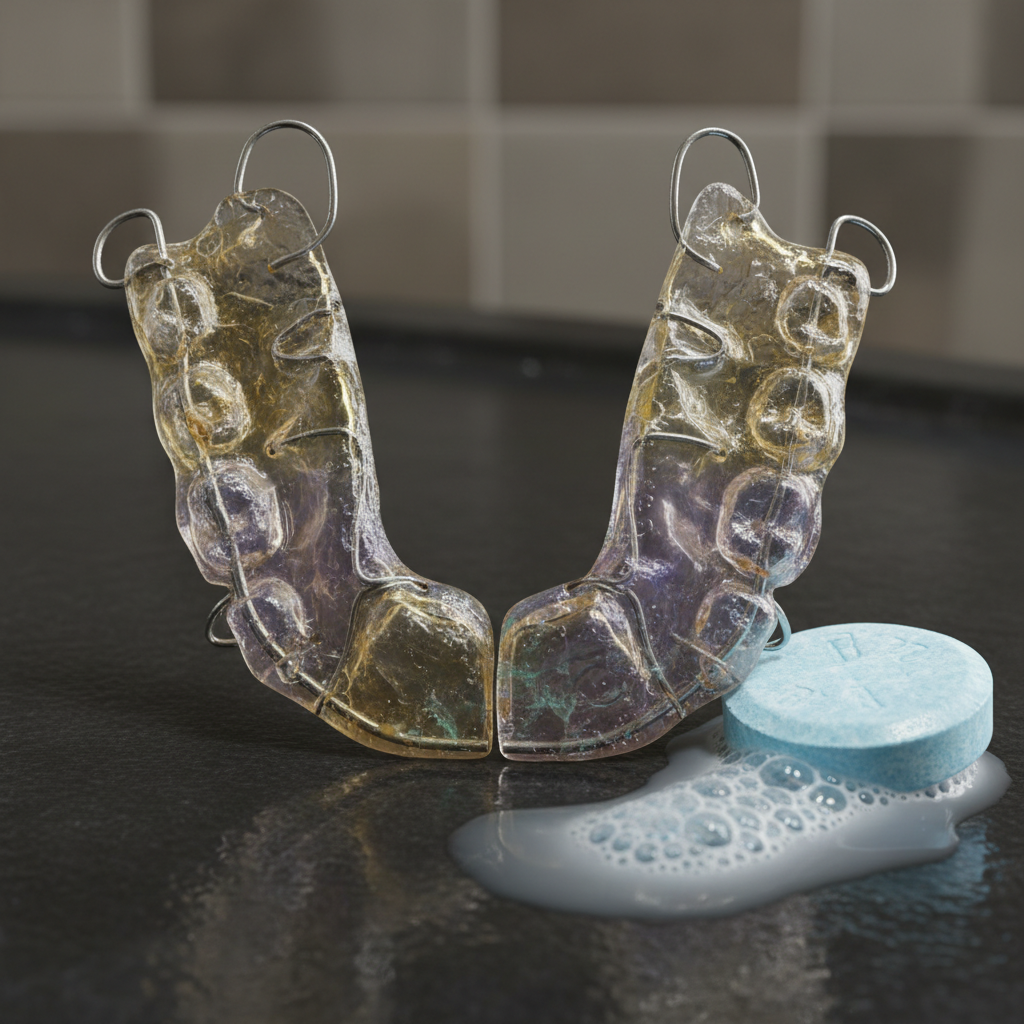
It boils down to this: Why risk ruining a custom medical device worth hundreds of dollars to save a few cents on a cleaning tablet? Specialized products and simple DIY solutions offer safer, more effective care that protects your smile and your wallet. Investing in the right care products ensures your retainer stays invisible and functional for years.
The Cost-Benefit Analysis
The risk of replacing a retainer far outweighs the convenience of cheap tablets.
- Replacement Cost: 150−500 per tray.
- Tablet Cost: $0.10 per tablet.
- Proper Cleaner: $0.20 per use.
What is the best choice? Use what your orthodontist recommends, not what is under the bathroom sink.
Final Recommendations
Stick to safe, proven methods.
- Yes: Castile soap, Retainer Brite, Ultrasonic pods.
- No: Denture tablets, Toothpaste, Boiling water.
- Maybe: Diluted vinegar (occasional).
Key Takeaway: The risks of clouding, brittleness, and bacterial retention make denture cleaner tablets a poor choice for retainer care compared to modern, specialized alternatives.
| Method | Safety Rating | Long-Term Viability | |
|---|---|---|---|
| Denture Tablets | Poor | Low | |
| Retainer Foam | Excellent | High | |
| Ultrasonic | Superior | Very High | |
| Vinegar Soak | Good | Medium |
Professional consensus overwhelmingly supports using material-specific cleaners over generic denture products.
Conclusion
While it is possible to use denture cleaner tablets on retainers in an emergency, it is rarely the best choice for long-term care. The abrasive ingredients and harsh chemicals designed for porcelain dentures can cause irreversible damage to soft orthodontic plastics, leading to cloudiness, brittleness, and increased bacterial growth. By prioritizing gentle, daily cleaning with mild soap or using specialized ultrasonic cleaners, you protect your investment and ensure your smile remains healthy and bright. For personalized advice on maintaining your dental appliances, contact us today to speak with a professional.
FAQ
Q1: Can I use Polident or Efferdent on my Invisalign trays?No, you should generally avoid using standard Polident or Efferdent on Invisalign trays because they contain persulfates and abrasives that can scratch the soft plastic, making them cloudy and more prone to trapping odors.
Q2: What is the best homemade solution for cleaning retainers?A mixture of equal parts white vinegar and lukewarm water is the safest homemade solution, as it effectively kills bacteria and dissolves mineral deposits without the abrasive chemicals found in commercial tablets.
Q3: How often should I soak my retainer?You should soak your retainer in a dedicated retainer cleaner or vinegar solution once a week for 15-20 minutes to prevent deep bacterial buildup, while relying on gentle brushing for daily maintenance.
Q4: Will using denture cleaner turn my retainer yellow?Yes, regular use of denture cleaner can turn clear retainers yellow or cloudy due to a chemical reaction between the bleaching agents in the tablets and the porous plastic material of the retainer.
Q5: Is it safe to use a toothbrush on my retainer?Yes, but you must use a soft-bristle toothbrush and mild dish soap; never use toothpaste, as its abrasive particles act like sandpaper and will create micro-scratches that harbor bacteria.
You may also interested in: