Guide to Mouth Guards
Dental injuries are a nightmare for your customers and a lost opportunity for your business if you don’t have the right solutions in stock. Whether you are supplying retail stores, dental clinics, or sports teams, the demand for high-quality oral protection is constant.
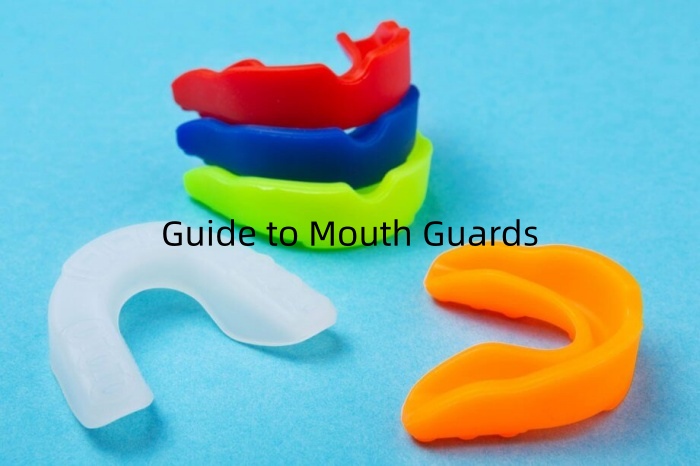
A mouth guard is a protective device for the mouth that covers the teeth and gums to prevent and reduce injury to the teeth, arches, lips, and gums. For B2B buyers, understanding the nuances of material quality, safety certifications, and user comfort is the key to selecting a product line that sells itself and minimizes returns.
What Are the Three Main Types of Mouth Guards You Should Stock?
Not all mouth guards are created equal, and your inventory needs to reflect the diverse needs of your end-users. Stocking a single type restricts your market share and ignores specific profit margins found in higher-tier products.
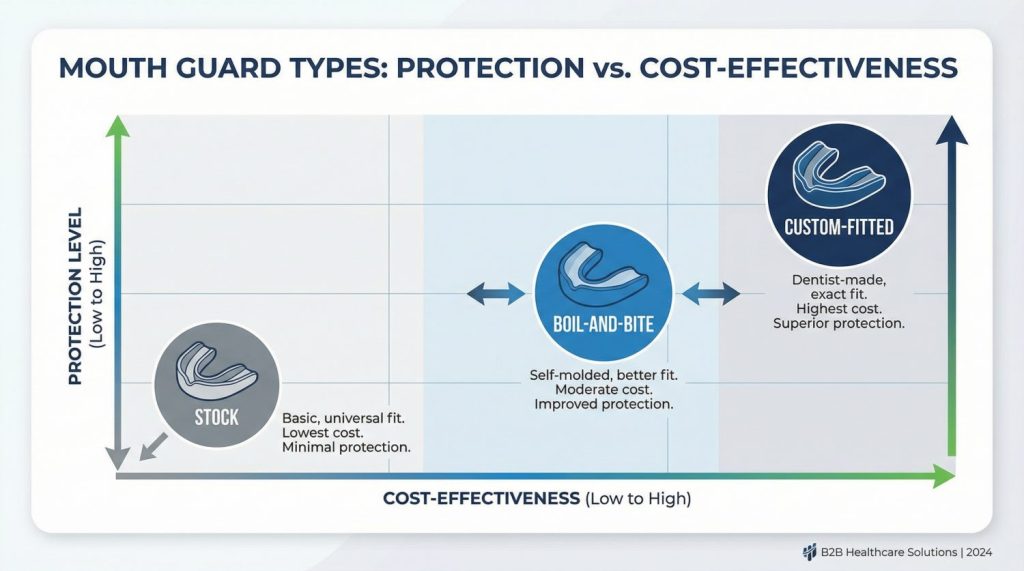
There are three primary categories of mouth guards available in the market today: Stock Mouth Guards, Boil-and-Bite Mouth Guards, and Custom-Fitted Mouth Guards. Each serves a different consumer segment, from the budget-conscious parent to the professional athlete. Understanding the pros and cons of each helps you curate a balanced product catalog that maximizes your revenue.
Understanding the Inventory Mix: Good, Better, Best
As a commercial buyer, you aren’t just buying plastic; you are buying compliance. If a guard is uncomfortable, the end-user won’t wear it, and they will blame the product. Here is how we break down the three tiers from a manufacturing and sourcing perspective.
1. Stock Mouth Guards (The “Drugstore” Option)
These are pre-formed, ready-to-wear guards. From a manufacturing standpoint, they are the cheapest to produce because they require no thermal properties for molding.
- Pros for Buyers: Extremely low wholesale cost, high volume turnover, no instructions needed.
- Cons: bulky, poor retention (they fall out), and they offer the least protection. Breathing is often obstructed.
- Verdict: These are your entry-level SKUs. Better than nothing, but we generally recommend these only for very casual use or mixed bulk packs for institutional settings where cost is the only driver.
2. Boil-and-Bite Mouth Guards (The “Happy Medium”)
This is the sweet spot for retail and sporting goods stores. Made from thermoplastic materials (often EVA—Ethylene Vinyl Acetate), these become pliable in hot water.
- Pros for Buyers: Excellent balance of price and performance. They offer a “custom feel” without the lab cost. This is likely your highest volume seller.
- Cons: If the user overheats them, they can deform. The material is softer and may wear out faster than cured acrylics.
- Verdict: The go-to for amateur athletes and school sports programs.
3. Custom-Fitted Mouth Guards (The “Gold Standard”)
These are typically supplied to dental professionals or high-end direct-to-consumer brands using impression kits.
- Pros for Buyers: Highest profit margin, highest customer satisfaction, zero breathing obstruction.
- Cons: Higher acquisition cost, longer lead time (if lab work is involved).
- Verdict: Essential for serious athletes and chronic bruxism cases. If you sell to dental clinics, this is your primary product.
Comparative Analysis for Procurement Managers
| Feature | Stock Guard | Boil-and-Bite | Custom-Fitted |
| Wholesale Cost | $ | $$ | $$$$ |
| Retail Margin Potential | Low | Medium | High |
| Material Density | Low/Generic | Medium/Thermoplastic | High/Multi-Laminate |
| User Complaint Rate | High (Discomfort) | Moderate (Molding errors) | Low (Perfect fit) |
| Target Audience | Occasional users | School teams, Amateur leagues | Pros, Heavy Grinders |
Do Sports and Sleep Guards Require Different Manufacturing Standards?
A common misconception among end-users is that one guard can do it all. As a supplier, it is your responsibility to educate your clients that using a sports guard for sleeping is not just uncomfortable—it can be harmful to their oral health.

Can I wear my football mouth guard to sleep? No. Sports guards are engineered to absorb macro-impacts (like a blow to the face), making them thick and bulky. Night guards are engineered to withstand micro-abrasions (grinding) and must be slim enough to allow for uninhibited breathing and swallowing during sleep.
The Technical Differences in Material and Design
When you are ordering from a manufacturer like ITS Dental Care, you will notice distinct differences in the specifications (specs) for these two categories. Mixing these up in your catalog descriptions can lead to liability issues or customer dissatisfaction.
Athletic Guards: The Impact Absorbers
- Function: The primary goal is shock absorption. The guard acts as a crash helmet for teeth. It needs to dissipate the energy from a sudden blow (an elbow, a ball, or pavement) across the entire jaw to prevent tooth fracture or avulsion (knocked-out teeth).
- Material Science: We typically use thicker, softer Ethyl Vinyl Acetate (EVA) for these. The material needs to be “gummy” enough to absorb shock.
- Coverage Area: These guards usually cover the upper teeth entirely and extend significantly over the gum line. This protects the soft tissue from being cut by the teeth during an impact.
- Buyer Note: For contact sports, look for “dual-density” options that have a harder outer shell for impact and a softer inner lining for comfort.
Night Guards: The Friction Barriers
- Function: The goal is separation. Bruxism (teeth grinding) involves immense pressure—up to 250 pounds of force—but it is static pressure, not impact. The guard prevents tooth-on-tooth attrition (wear).
- Material Science: These are often made from harder, thinner acrylics or dual-laminate materials. A “hard/soft” combo is popular: soft inside for comfort against the teeth, hard outside to resist the grinding.
- Comfort Profile: They must be streamlined. A bulky sports guard triggers the gag reflex during sleep and can actually stimulate more chewing in some patients.
- Buyer Note: Sizing is critical here. If you sell direct-to-consumer night guards, ensure your impression kits or moldable materials are high-fidelity.
Key Differences at a Glance
| Feature | Sports Guard | Night Guard |
| Primary Threat | External Impact (Hits) | Internal Pressure (Grinding) |
| Thickness | 3mm – 5mm+ | 1mm – 3mm |
| Gum Coverage | High (protects gums) | Minimal (comfort focused) |
| Stiffness | Flexible/Soft | Rigid or Semi-Rigid |
How Can You Help Customers Choose the Right Guard for Their Activity?
Different activities generate different forces on the jaw, requiring specific protective properties. A weightlifter clenching their teeth needs a different solution than a hockey player facing a puck at 80 mph.
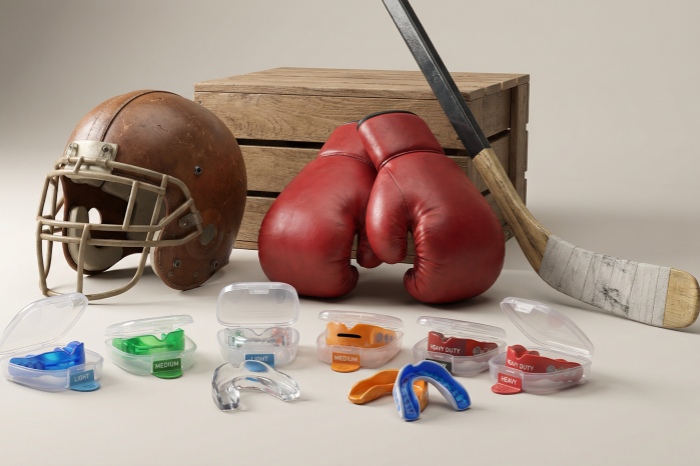
To choose the right guard, your customers must categorize their activity level. Low-impact activities like yoga or weightlifting require protection against clenching (bruxism), while high-impact contact sports like MMA, football, or hockey require maximum shock absorption and retention to prevent tooth loss.
Segmenting Your Market for Better Sales
One size does not fit all activities. By segmenting your product offerings based on activity, you can increase your average order value and position your brand as a specialist rather than a generalist.
1. Low-Impact Sports (The “Clenchers”)
- Activities: Weightlifting, Yoga, Pilates, Gymnastics.
- The Need: When people lift heavy weights, they naturally clench their jaw. This can cause micro-fractures in teeth or tension headaches. They don’t need a bulky football guard; they need a low-profile guard that acts as a bite pad.
- Product Recommendation: Slim-fit boil-and-bite guards or heavy-duty night guards. Marketing these specifically to the fitness community is a huge, untapped niche for many retailers.
2. High-Impact/Contact Sports (The “Crash Test Dummies”)
- Activities: Football, Hockey, Rugby, Boxing, MMA, Basketball.
- The Need: These athletes need maximum retention. The guard must stay in the mouth even when the athlete is shouting or heavily winded. If the guard falls out, it’s useless.
- Product Recommendation: High-density EVA guards with “fins” or “gel” liners that grip the teeth. Look for products with integrated breathing channels—this is a major selling point for athletes who need oxygen.
3. The “Braces” Factor (The Orthodontic Niche)
- The Problem: Standard boil-and-bite guards can get locked onto brackets or rip them off during removal. This is a nightmare for parents who just paid thousands for braces.
- The Solution: You must stock specific “Ortho-Guards.” These are made of medical-grade silicone that doesn’t bond to the brackets. They usually feature a channel to sit over the braces rather than molding into them.
- B2B Tip: This is an essential SKU for school sports suppliers, as a significant percentage of student-athletes wear braces.
Is the Boil-and-Bite Molding Process Easy for Your End-Users?
The number one reason for product returns in the mouth guard category is “poor fit” or “ruined during molding.” If your instructions aren’t clear, or if the material is unforgiving, your margins will suffer.
Molding a boil-and-bite guard is a precise four-step process: Boil, Dip, Bite, and Set. The critical moment is the “Bite,” where the user must create strong suction to mold the thermoplastic material tightly around the teeth and gums for a secure hold.
Reducing Returns Through Education
This is a massive selling point. If a customer messes up the first time, they shouldn’t have to throw the product away. Here is the process we recommend printing on your packaging to ensure success.
1. Preparation
The user needs a pot of boiling water, a bowl of ice water (crucial for setting), and a timer. Precision matters—guessing the time leads to melted plastic or hard rubber.
2. The Process
- The Boil: Submerge the guard for the exact time specified (usually 30-60 seconds). Pro-tip: If the water is a rolling boil, reduce the time slightly to prevent melting.
- The Dip: Quickly dip the guard in room-temperature water for 1 second. This prevents burning the user’s gums—a common complaint that leads to bad reviews.
- The Bite (The Money Step): Place the guard in the mouth. Bite down firmly but not all the way through. Crucially: Press the tongue against the roof of the mouth and suck all the air and water out. Use fingers to press the lips against the gums. This suction creates the vacuum fit.
- The Set: Once molded (about 30 seconds of biting), drop it into the ice water to “lock” the shape instantly.
3. Troubleshooting for Customers
- It’s too loose? Re-boil it. Most high-quality guards can be remolded 2-3 times.
- It triggers my gag reflex? The back may be too long. Advise customers they can trim the ends with scissors before the final molding.
Why Material Matters: Cheaper plastics have a narrow temperature window. If you miss it by 5 degrees, they fail. Our proprietary blends offer a wider tolerance, making the home-molding process much more forgiving for your customers.
Why Is Hygiene the Best Cross-Selling Opportunity?
Selling a mouth guard is a one-time transaction, but selling hygiene is a recurring revenue stream. Mouth guards are porous; without proper cleaning, they become breeding grounds for bacteria, yeast, and mold.
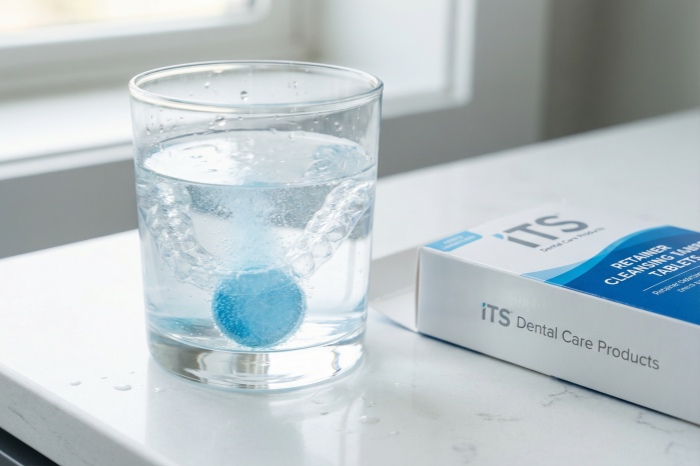
Hygiene 101 for mouth guards involves daily rinsing and weekly deep cleaning. Users should avoid toothpaste, which is abrasive and creates micro-scratches where bacteria hide, and instead use specialized non-abrasive cleaners like effervescent tablets.
The “Ew” Factor: Educating to Sell
If you explain the “Ew” factor to your buyers, they will understand the necessity of add-on products. A study found that mouth guards can harbor life-threatening bacteria like Staph and Strep if not cleaned. This is your angle to sell retainer cleansing tablets.
1. Daily Cleaning Protocols
Instruct users to rinse with cool water and mild soap immediately after use. Hot water can warp the fit they worked so hard to achieve.
- The “Do Not Use” List: Toothpaste (abrasive), Bleach (toxic), Boiling Water (warping).
2. Deep Cleaning (The Upsell)
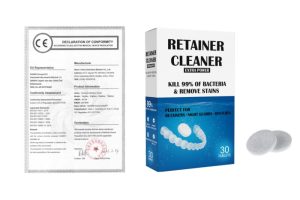
Once a week, the guard needs a chemical clean. This is where Retainer Cleansing Tablets come in. They dissolve in water, kill 99.9% of bacteria, and remove tartar buildup without scratching the surface. Bundling a box of tablets with every mouth guard sale is a simple way to increase basket size.
3. Storage Solutions
Never throw a wet guard into a dark gym bag. That is a recipe for mold. A ventilated case is non-negotiable. If you are selling guards that come in a plastic bag, you are doing your customers a disservice. Upgrade to rigid, ventilated cases to protect the product and the user’s health.
When Should You Encourage Customers to Replace Their Guards?
A mouth guard is a consumable product, not a permanent fixture. Over time, materials degrade, elasticity is lost, and protection diminishes. For a B2B supplier, defining the replacement cycle is key to forecasting demand.
Customers should replace their mouth guards when they show signs of wear and tear, such as chew marks, holes, or a loose fit. Athletes should generally replace guards every season, while night guard users may get 1 to 3 years of use depending on the severity of their bruxism.
The Lifecycle of Protection
You can drive repeat business by educating your customers on the “Expiration Date” of their gear. A guard that doesn’t fit is a guard that doesn’t protect.
Signs of Failure (The “Check Engine” Lights)
- Visual Damage: If the user can see deep chew marks or if the material is fraying, the structural integrity is compromised. It won’t absorb shock effectively.
- Fit Issues: If the user has to bite down to keep the guard in place, it’s done. A guard must stay up on its own (retention). If it falls when they speak or open their mouth, it’s time for a new one.
Timeline Rule of Thumb for Buyers
- Athletes: Every season or every 6 months. For growing kids, this is even more frequent because as the jaw grows and new teeth erupt, the old guard will restrict development or simply not fit.
- Night Guards: 6 months to 3 years. This varies wildly based on the “Grind Factor.” Severe grinders can chew through an acrylic guard in months.
- Kids: Immediate replacement when new teeth come in or if the guard feels tight.
B2B Strategy: Consider offering subscription models or “season packs” (2-3 guards per pack) for athletes, ensuring they always have a fresh backup when the first one wears out.
What Are the Most Common Questions Your Customers Will Ask?
Anticipating customer questions builds trust and authority. When you provide clear, honest answers to technical questions, you position your business as an expert resource rather than just a vendor.
Common questions revolve around safety and cost: Can a mouth guard prevent concussions? Why do gums bleed? Is a custom guard worth the high price tag? Addressing these honestly helps manage expectations and reduces liability.
Addressing the Skeptics
1. Can a mouth guard prevent concussions?
- The Science: This is a controversial topic. While some studies suggest mouth guards can absorb force that would otherwise travel to the brain, no mouth guard can guarantee concussion prevention. They are primarily for dental protection (preventing broken teeth and lip lacerations). Be careful not to make medical claims you can’t back up on your packaging.
2. Why do my gums bleed when I wear one?
- The Cause: This usually means the guard is too high or the edges are too sharp, cutting into the gum tissue.
- The Fix: It’s a sign of poor fit. If it’s a boil-and-bite, trim the edges and remold. If it persists, it could be gingivitis, not the guard.
3. Is a custom guard worth the money?
- The ROI: For a casual user? Probably not. For a daily user (night grinding) or a high-impact athlete? Absolutely. The cost of fixing a single chipped tooth ($300-$1000+) dwarfs the cost of a $150 custom guard. It is a classic “pay a little now or a lot later” scenario.
Conclusion
Sourcing the right mouth guards for your business isn’t just about filling shelf space; it’s about providing a critical safety net for your customers. From the affordable utility of boil-and-bite options to the precision of custom-fit solutions, understanding the “why” and “how” behind these products will set you apart in a crowded market.
Remember, fit matters, hygiene is a revenue opportunity, and the right material can save a smile. If you are ready to upgrade your inventory with high-quality, reliable dental protection, contact ITS Dental Care today. Let’s discuss how we can supply your business with the protection your customers deserve. Your future self (and your profit margins) will thank you.
You may also interested in: