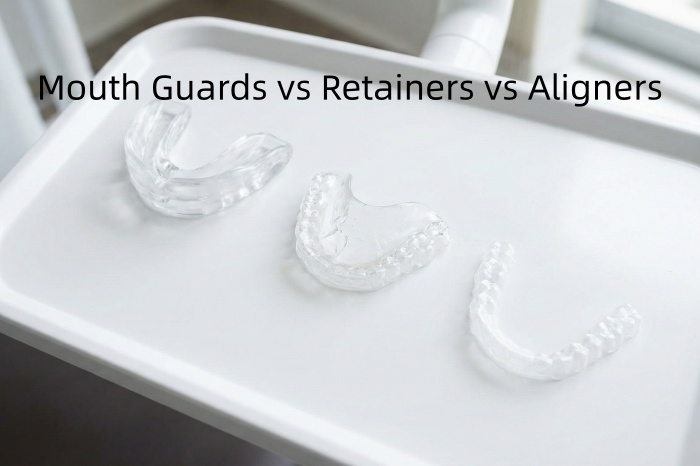
Mouth Guards vs Retainers vs Aligners
You are likely staring at a spreadsheet of SKUs or a request from a client, wondering why three pieces of clear plastic have such different price points and specifications. Misunderstanding the core differences between these dental devices leads to frustrated patients, increased product returns, and missed opportunities for upsell revenue.
Mouth guards protect teeth from impact or grinding, retainers hold teeth in place to prevent relapse, and aligners actively move teeth to correct their position. While they may look identical to the untrained eye, their material science, intended medical function, and hygiene requirements are distinct. Understanding these nuances ensures you stock the right inventory and provide the necessary retainer cleansing tablets to keep them safe and effective.
For dental distributors and B2B buyers, clarity here is profitable. We often see procurement teams treat these categories as interchangeable, but the engineering behind a shock-absorbing mouth guard is vastly different from the rigid force application of an aligner. Let’s break down exactly what you are buying, selling, and why it matters to your bottom line.
Quick Answer for Busy People (30-Second Summary)
If you are managing a procurement list or analyzing new product lines, you do not have time for fluff. Here is the high-level breakdown of how these three devices differ in function, material, and profitability for your business.
Mouth guards are soft and thick for shock absorption. Retainers are rigid and static to prevent relapse. Aligners are rigid but active, changing shape every two weeks to force movement. Your inventory mix should reflect the distinct “jobs” these products do: protection, maintenance, or correction.
To truly optimize your supply chain, you need to look beyond the surface level. Time is money in the dental supply industry, and stocking the wrong item can freeze capital. Here is the essential breakdown for your purchasing and sales teams to understand immediately:
- Mouth Guards (The Protectors):
- Primary Job: Absorb shock (sports) or prevent surface wear (grinding/bruxism).
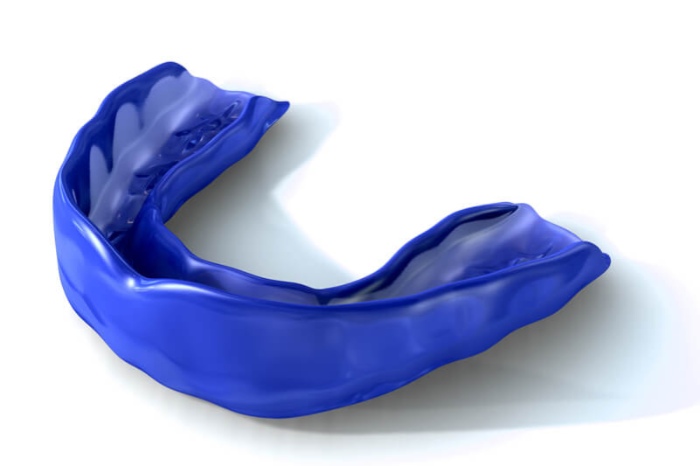
- Material: Generally softer, thicker thermoplastics like EVA (Ethylene-Vinyl Acetate). They need “give” to cushion a blow.
- Wear Time: Only during specific activities (sleeping or playing sports).
- Target Audience: Athletes and patients with high stress/bruxism. This is a high-turnover consumable market.
- Retainers (The Anchors):
- Primary Job: Hold teeth in a fixed position to stop them from drifting back after treatment.
- Material: Durable, rigid plastics or wire/acrylic combos. They are built for longevity.
- Wear Time: Usually overnight, forever (lifetime commitment).
- Target Audience: Post-orthodontic patients (braces or aligner graduates). This is a long-tail market with steady replacement needs.
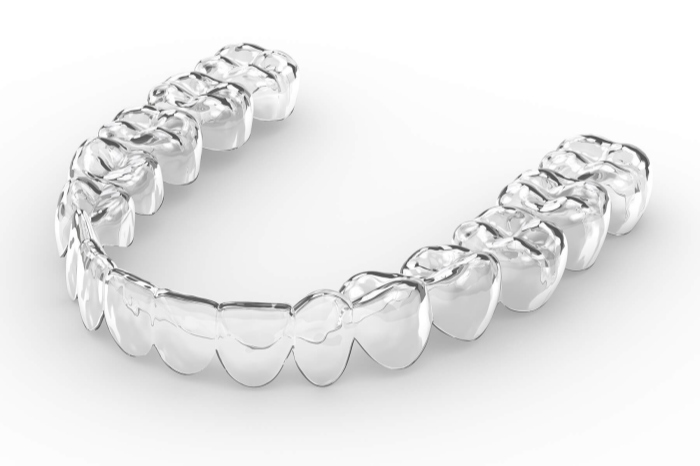
- Aligners (The Movers):
- Primary Job: Apply calculated pressure to move teeth into a straighter alignment.
- Material: Specialized, medical-grade thermoplastic (often proprietary blends like multi-layer polyurethane).
- Wear Time: 22+ hours a day, removed only for eating and cleaning.
- Target Audience: Patients seeking cosmetic or functional correction without metal braces. This is a high-ticket, treatment-based market.
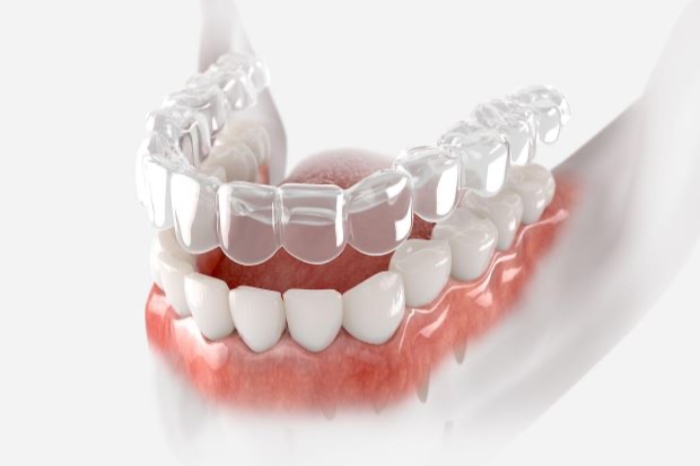
The B2B Takeaway: Do not treat these as interchangeable “plastic trays.” A mouth guard cannot move teeth, and an aligner is too thin to protect against a hockey puck or heavy bruxism. Furthermore, the aftercare upsell opportunity differs for each. Aligner users go through high volumes of cleaning supplies due to 22-hour wear and constant removal, whereas mouth guard users focus on bacteria elimination due to long overnight storage in a dark, damp case. Recognizing this helps you bundle the right ancillary products with each device sale.
Why People Confuse Mouth Guards, Retainers, and Aligners
To the untrained eye—and your end consumers—a clear piece of plastic is just a clear piece of plastic. This visual ambiguity is the number one reason for consumer misuse and dissatisfaction, which eventually impacts your return rates and brand reputation.
They are all removable, tooth-shaped, and often made from transparent materials. The confusion stems from their “thermoformed” appearance. However, the engineering tolerances and material science behind a 0.75mm aligner differ vastly from a 2mm soft night guard.
They Look Similar — But They Do Very Different Jobs
From a manufacturing perspective, which many of our B2B partners are familiar with, all three start as a sheet of thermoplastic. This sheet is heated and sucked down over a dental model using vacuum forming or pressure molding technology. This shared manufacturing origin gives them that signature “clear shell” look that causes so much confusion on the retail shelf or in the clinic.
However, the similarity ends at the visual level. A clear Essix retainer looks 95% identical to an Invisalign® style aligner, but the molecular structure of the plastic is different.
- Mouth Guards use soft polymers that have “give.” If you bite into them, they squish slightly to dissipate energy. They are designed to be sacrificial barriers.
- Retainers & Aligners use rigid polymers. If you bite them, they resist. They are designed to transfer force (aligners) or resist force (retainers), not absorb it.
What Happens If You Use the Wrong One
As a supplier, you must educate your buyers to prevent misuse. Using the wrong device isn’t just ineffective; it can be harmful to the patient and legally risky for the provider.
- Using an Aligner as a Mouth Guard:
- The Risk: Shatter hazard. Aligners are thin (often 0.75mm). A blow to the face during sports can shatter the rigid plastic, driving sharp shards into the gums or lips.
- The Commercial Impact: Emergency dental visits and potential liability claims against the provider or seller for failing to warn the consumer.
- Using a Night Guard as a Retainer:
- The Risk: Tooth movement. Soft night guards allow for “micro-movement” of teeth. If a patient just finished braces and switches to a soft generic guard, their teeth may shift back (relapse), wasting thousands of dollars in orthodontic work.
- The Commercial Impact: Dissatisfied patients demanding refunds on their orthodontic treatment because “it didn’t work,” when in reality, the retention protocol was flawed.
- Using a Retainer to Straighten Teeth:
- The Risk: Ineffectiveness and pain. Retainers are passive devices. They do not have the “programmed” movement steps built into the geometry. Forcing a retainer over crooked teeth won’t straighten them; it will just hurt the patient and likely crack the device.
- The Commercial Impact: A broken device that requires replacement, frustrating the customer and increasing warranty costs.
What Is a Mouth Guard? (And Who Really Needs One)
Protection is a massive market segment that spans from elementary school sports teams to high-stress executives. Whether for high-impact sports or the silent epidemic of sleep bruxism, mouth guards are the first line of defense for enamel preservation.
A mouth guard is a protective barrier worn over the teeth to cushion blows to the face or minimize the damage from teeth grinding. It acts as a shock absorber, distributing force to prevent tooth fractures, jaw injuries, and soft tissue cuts.
In the B2B space, “Mouth Guard” is an umbrella term that covers two distinct, high-volume categories. Understanding the difference helps you target the right retail channels or clinics and stock the appropriate inventory.
What Mouth Guards Are Designed to Do
The core function is energy absorption. Unlike retainers, which are about position, mouth guards are about physics.
- Sports: The guard absorbs the kinetic energy from a tackle, a ball, or an elbow, preventing that energy from snapping a tooth root or fracturing the jawbone.
- Night Grinding (Bruxism): The guard acts as a sacrificial layer. Instead of grinding enamel-on-enamel (which destroys teeth and causes sensitivity), the patient grinds enamel-on-plastic. The plastic wears down over time, but the teeth stay safe.
Types of Mouth Guards Explained Simply
As a buyer, you will encounter three main tiers of products:
- Stock Mouth Guards:
- Target: General Retail / Pharmacies.
- Pros: Extremely low cost.
- Cons: Poor fit, bulky, often inhibit breathing. Sales volume is high, but customer satisfaction is generally low.
- Boil-and-Bite Mouth Guards:
- Target: Sporting Goods / Drugstores.
- Pros: Mid-range price, customizable at home using hot water.
- Cons: The fit is better than stock but still lacks the precision of a lab-made guard.
- Custom Dental Mouth Guards:
- Target: Dental Clinics / Labs.
- Pros: Premium pricing, perfect fit, high comfort, maximum safety.
- Cons: Requires a dental impression or scan.
Pros and Cons of Mouth Guards
Pros: They are the cheapest insurance policy against dental trauma. For suppliers, the consumable nature of night guards is a major benefit. Patients literally chew through them, meaning they must be replaced every 6 to 12 months, guaranteeing consistent reorders.
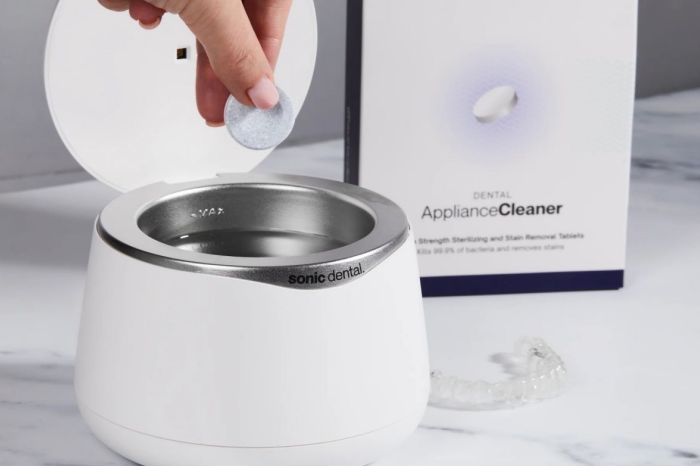
Cons: They are bulky. The biggest complaint we hear from the market is “it’s hard to keep clean.” Because they are textured and soft, they trap bacteria easily in the material’s micropores. This creates a secondary market need for effective cleaning solutions. A standard toothbrush often misses deep-set bacteria in soft materials. We recommend pairing these sales with our ultrasonic cleaning tablets, which are formulated to penetrate the softer porous material of mouth guards without degrading the rubberized texture.
What Is a Retainer? (Why Teeth Move Back Without One)
Orthodontics does not end when the braces come off. In fact, retainers are the “maintenance phase” of the industry, representing a lifetime supply requirement for every single orthodontic patient.
Retainers are static devices designed to hold teeth in their corrected positions. Without them, “elastic memory” in the periodontal fibers pulls teeth back toward their original spots. Retainers are the only thing standing between a perfect smile and costly relapse.
For our commercial partners, retainers represent a stable, recurring revenue stream. Unlike aligners (short-term treatment) or mouth guards (situational usage), retainers are forever. A patient who stops wearing them at age 30 will see their teeth shift at age 40.
The Real Job of a Retainer
Think of teeth like an iceberg; you only see the top, but the roots are anchored in bone and connected by elastic ligaments. After braces move teeth, the bone around the roots is soft, and the ligaments are stretched like rubber bands.
- The “Elastic Recoil”: If the retainer isn’t worn, those ligaments snap back, pulling teeth crooked again.
- The Buyer’s Perspective: Patients often lose or break retainers. Clinics need a reliable supply of retainer materials (or replacements) and—crucially—a way to keep them clean for years.
Common Types of Retainers
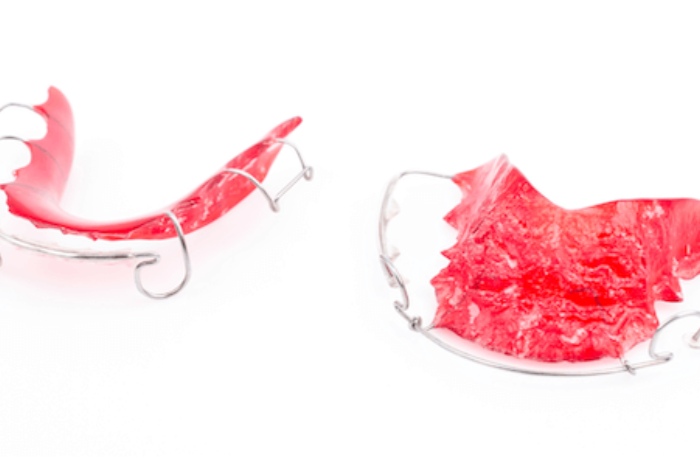
Hawley Retainers: The classic “wire and acrylic” plate.
- Durability: Extremely high. Can last for years.
- Market Trend: Decreasing popularity due to the visible metal wire, but they remain the gold standard for durability and adjustability.
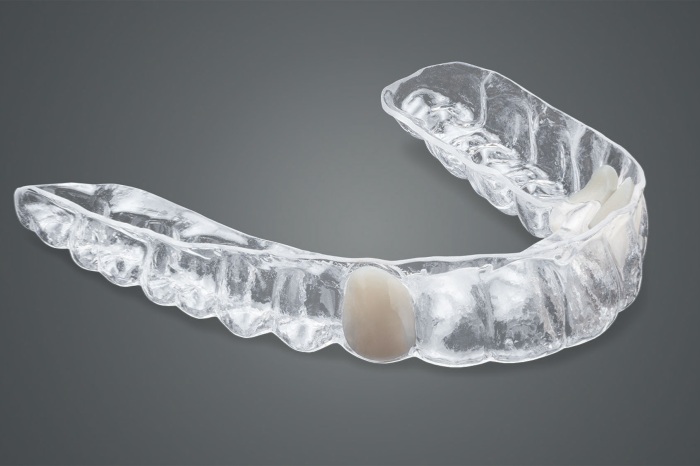
Clear Plastic Retainers (Essix): Vacuum-formed clear trays.
- Durability: Moderate. They tend to crack, yellow, or stretch over 6-12 months of use.
- Market Trend: Extremely high demand. Patients prefer them for aesthetics. This is the volume driver in the current market, leading to more frequent replacement sales.
Fixed/Permanent Retainers: A wire bonded behind the teeth.
- Note: These collect massive amounts of plaque and require specialized threading floss, but they don’t get lost.
Pros and Cons of Retainers
Pros: They are essential for protecting the investment of braces. Every orthodontic case requires one, guaranteeing a 1:1 attach rate with treatment.
Cons: Hygiene is a massive battle. Because patients wear them for years (unlike 2-week aligners), they accumulate calcified plaque (tartar) that brushing cannot remove. This creates a “white crust” on the device that smells bad. This is where retainer cleaning tablets become a mandatory upsell. Without chemical cleaning, a 6-month-old retainer becomes a biohazard of bacteria and smell, often leading patients to stop wearing it, which results in relapse.
What Are Aligners? (How They Straighten Teeth Step by Step)
This is the fastest-growing segment in dentistry. Clear aligners have revolutionized orthodontics by making it possible to fix teeth without the “metal mouth” look, driving massive demand from adults and teens alike.
Aligners are a series of tight-fitting, custom-made trays that gradually shift teeth. Unlike a passive retainer, an aligner is “programmed” with slight misalignments that force the teeth to move to match the tray shape. You switch to a new tray every 1–2 weeks to continue the movement.
Aligners are not just plastic; they are engineering marvels. For B2B buyers, understanding the “Series” concept is vital. You aren’t selling one device; you are facilitating a supply chain of dozens of devices per patient.
How Clear Aligners Actually Work
It is simple physics applied to biology.
- The Mismatch: Aligner #1 fits your teeth mostly, but it is slightly straighter than your current teeth.
- The Force: When you force the tray on, the plastic tries to return to its molded shape. This exerts pressure on the teeth.
- The Remodeling: This pressure stimulates bone remodeling, allowing the tooth to move into the space provided by the tray.
- The Series: Once the tooth matches Aligner #1, you switch to Aligner #2, and the process repeats.
Aligners vs Traditional Braces
- Appearance: Aligners are nearly invisible. This is the #1 selling point.
- Lifestyle: They are removable. Patients can eat popcorn, apples, and sticky foods—things banned with braces.
- Hygiene: It is easier to brush teeth since the device comes out, but the aligner itself gets dirty instantly because it covers the teeth all day.
Pros and Cons of Aligners
Pros: High aesthetic appeal, massive consumer demand, and high ticket value for clinics. The market is shifting aggressively toward this model.
Cons: They require strict discipline (22 hours/day wear). If the patient doesn’t wear them, they don’t work. Also, because they cover the teeth all day, they trap acid and sugar against the enamel. We always recommend that clinics bundle custom retainer cleaning tablets with every aligner case. This prevents “aligner funk” and protects the patient’s oral health during treatment, reducing the likelihood of cavities forming under the trays.
Mouth Guards vs Retainers vs Aligners: Side-by-Side Comparison
When your procurement team or your customers are staring at a catalog, they need clear data points. Let’s strip away the marketing fluff and compare the specifications directly.
The main differences lie in rigidity and intent. Mouth guards are soft and protective; retainers are rigid and static; aligners are rigid and active. Below is a comparison of the key metrics that matter for medical effectiveness and inventory planning.
Use this table to train your sales staff or to help your buyers make quick decisions. It clearly delineates why a customer cannot simply “buy a clear tray” and expect it to do all three jobs.
Comparison Table: Purpose, Wear Time, Cost, and Results
| Feature | Mouth Guard | Retainer | Aligner |
| Primary Purpose | Protection (Impact/Grinding) | Maintenance (Hold Position) | Correction (Move Teeth) |
| Material Feel | Soft, rubbery, thick | Hard, rigid, thin | Hard, rigid, very thin |
| Wear Schedule | Nightly or during sports | Nightly (forever) | 22 Hours/Day (remove to eat) |
| Lifespan | 6 months – 2 years | 6 months – 5+ years | 1 – 2 weeks (disposable) |
| Cost (End User) | Low to Medium | Medium | High |
| Active Force? | No (Passive protection) | No (Passive holding) | Yes (Active movement) |
Which One Is Medical, Preventive, or Cosmetic?
- Mouth Guard = Preventive. It prevents future damage. It is a safety device designed to mitigate risk.
- Retainer = Medical/Maintenance. It maintains a medical result. It is a stability device ensuring previous work isn’t undone.
- Aligner = Cosmetic/Medical. It creates a new result. It is a treatment device designed to alter anatomy.
Manufacturer’s Note: While the devices differ, the hygiene requirement is universal. All three live in the human mouth—the warmest, wettest, most bacteria-prone environment in the body. Cross-selling hygiene products is the smartest way to increase the lifetime value of any of these device sales. Whether it is a soft guard or a hard aligner, if it isn’t cleaned, it becomes a health risk.
Which One Do You Actually Need?
Context is everything. Your customers aren’t buying “plastic”; they are buying a solution to a specific problem. Guiding them to the right product builds trust and reduces return rates.
If you grind your teeth, you need a mouth guard. If you just finished braces, you need a retainer. If you want to straighten crooked teeth, you need aligners. Crossing these streams leads to failure—retainers won’t protect against heavy grinding, and mouth guards won’t stop orthodontic relapse.
Here is how to qualify the need based on the customer’s situation, which allows you to segment your marketing and sales efforts effectively.
If You Grind Your Teeth at Night
The customer needs a Night Guard.
- Why: The forces exerted during sleep bruxism are massive—up to 250 lbs of pressure. A thin aligner or retainer will crack under this load. They need the shock absorption of a specialized night guard material (typically 2mm to 4mm thick). If you sell them a retainer, they will chew through it in weeks, leading to a warranty claim.
If You Just Finished Braces or Aligners
The customer needs a Retainer.
- Why: The bone is still healing. Without a rigid “anchor,” the teeth will drift. This is non-negotiable. B2B buyers should always pair the sale of orthodontic supplies with a long-term supply of retainer materials. A clinic that doesn’t provide a retainer is failing the patient.
If You Want Straighter Teeth Without Braces
The customer needs Aligners.
- Why: This is the only “active” option. Putting a retainer on crooked teeth does nothing. The patient needs the staged, incremental pressure that only a series of aligners can provide. This is a treatment plan sale, not just a product sale.
Care, Cleaning, and Hygiene: Why It Matters More Than You Think
Here is the dirty truth: 50% of bacterial accumulation on these devices comes from improper cleaning. For a B2B supplier, offering a cleaning solution is not just an add-on; it’s a necessity for product performance.
Porous plastic traps bacteria, leading to bad breath, plaque buildup, and even “cloudy” devices that look dirty. Toothpaste is too abrasive and scratches the plastic, creating more hiding spots for germs. The only safe way to clean them is using non-abrasive chemical soaking tablets.
At ITS Dental Care, we specialize in this exact niche. We see thousands of devices ruined because patients used a toothbrush and toothpaste, thinking they were doing the right thing.
What Happens If You Don’t Clean Them Properly
- Micro-Scratches: Toothpaste contains abrasives like silica. While great for enamel, scrubbing a clear aligner or retainer with it creates microscopic scratches on the soft plastic surface.
- Cloudiness: These scratches diffuse light, turning a “clear” aligner into a “foggy, white” piece of plastic. This defeats the purpose of “invisible” orthodontics.
- Biofilm & Smell: Bacteria nest in these scratches. This leads to the infamous “retainer breath.” Once a device smells, the patient stops wearing it, and the treatment fails.
Best Cleaning Methods for Each Device
- Daily Cleaning: Rinse with water and soak in a specialized solution.
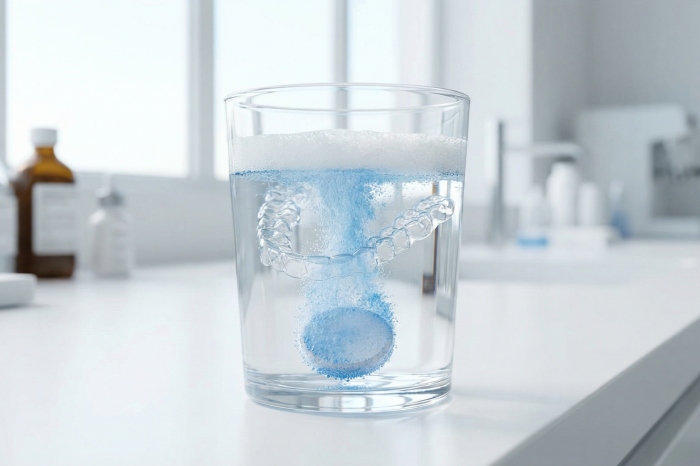
- Deep Cleaning: Use an effervescent tablet that can reach into the micropores that a brush cannot reach.
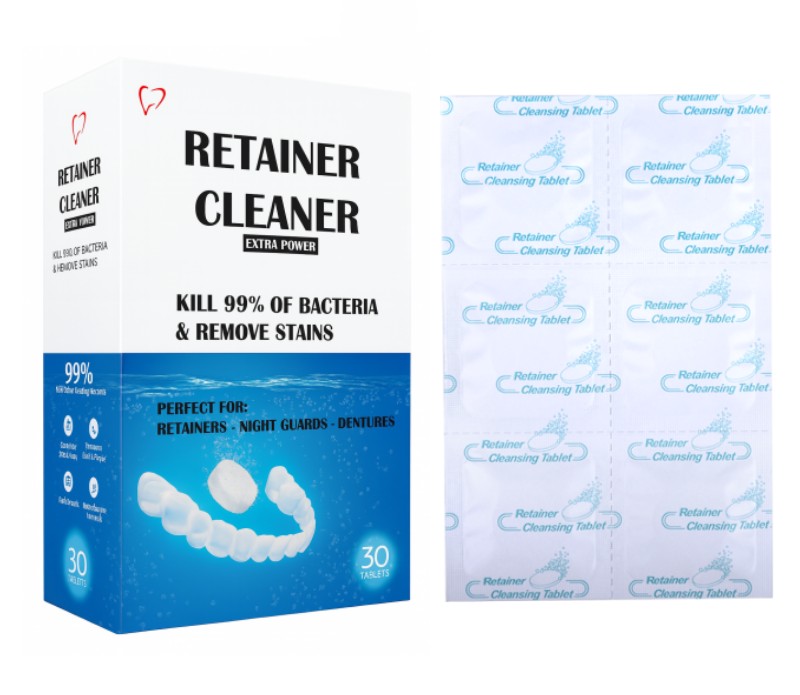
- Why Cleaning Tablets Work Well: Our formula uses oxidation to break down the cell walls of bacteria without scrubbing. It lifts organic debris (plaque) out of the pores of the plastic chemically.
- Recommendation: Whether you are a clinic or a distributor, ensure you are stocking high-quality cleaning tablets. It protects the integrity of the devices you sell. You can even explore private label options to brand these cleaning solutions as your own, adding margin to every sale and keeping your brand name in the customer’s bathroom daily.
Cost, Lifespan, and Replacement: What to Expect Long Term
Understanding the lifecycle of these products helps in forecasting sales volume. Some are one-off purchases; others are recurring disposables.
Mouth guards generally last 6 to 12 months depending on grinding severity. Retainers can last years if cared for but often need replacement annually due to wear. Aligners are disposable, replaced every 1–2 weeks, representing the highest volume turnover in the category.
For a B2B buyer, “Lifespan” translates directly to “Reorder Cycle.” Knowing these cycles allows you to automate follow-ups and keep your inventory lean yet responsive.
Average Cost Ranges Explained Simply
- Mouth Guards:
- Store-bought: Cheap ($15-$30), but low margin and low loyalty.
- Custom Lab: Expensive ($300+), but high value. The material cost is low, but the labor is high.
- Retainers:
- Replacement Cost: Usually $150-$500 per set. This is a significant expense for patients, so they are motivated to keep them clean.
- Aligners:
- Treatment Cost: $3,000 – $6,000 total. This is a high-stakes purchase where quality control is paramount. A single defect in one tray can throw off the entire treatment timeline.
How Long Each One Lasts
- The “Grind” Factor: A night guard is supposed to wear out. If a patient grinds through a guard in 6 months, the product did its job. You should position replacement guards as a “subscription” or recurring need, rather than a failure of the product.
- The Hygiene Limit: Even if a retainer physically holds together for 5 years, we often recommend replacement after 12-24 months purely for hygiene reasons, unless the patient has been rigorously using retainer cleaning tablets daily. Plastic eventually becomes porous and absorbs fluids that are difficult to sterilize.
Final Verdict: Mouth Guard vs Retainer vs Aligner?
The dental market is segmented by need, not just product type. Your success lies in matching the right engineered plastic to the right clinical outcome.
Use a mouth guard for protection, a retainer for maintenance, and aligners for correction. There is no crossover. As a buyer, ensure you have reliable manufacturing partners for the devices and a robust supply of cleaning products to support the long-term success of your customers.
At ITS Dental Care, we understand the chemistry and the market dynamics of all three. We know that a great device is only as good as the maintenance routine that supports it.
- If you need protection inventory, focus on durability, thickness, and comfort.
- If you need retention solutions, focus on clarity, longevity, and hygiene support.
- If you need correction systems, focus on precision, packaging, and patient compliance tools.
My One-Sentence Recommendation: Don’t just sell the plastic; sell the complete care system—including the right hygiene protocols—to ensure your customers get the results they paid for.
Would you like to discuss how to add private-label cleaning tablets to your inventory to support these devices?
Conclusion
Mouth guards shield, retainers hold, and aligners move. Knowing the difference protects your bottom line. Always pair these devices with proper cleaning solutions to ensure customer satisfaction and repeat business.
You may also interested in: