What Are Denture Cleansing Tablets?
Ignoring denture hygiene leads to furious customers and returned products. If you supply dental care items, offering a sub-par cleaning solution risks your reputation and your client’s oral health.
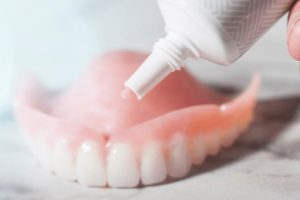
denture cleansing tablets are specialized, water-soluble tablets containing oxidizers and effervescent agents designed to kill bacteria, remove stains, and eliminate odors from dental prosthetics without abrasion.
As a manufacturer at ITS Dental Care, we see firsthand that the market for denture care is shifting. It is not just about having a product on the shelf; it is about having a product that works. Retailers and clinics are moving away from generic soaps and looking for specialized formulas. This article breaks down exactly what these tablets are and why they are a critical inventory item for any medical supply business.
What Are Denture Cleansing Tablets?
Many buyers confuse these tablets with general breath mints or simple soap, but that is a costly mistake. If your product portfolio lacks a dedicated chemical cleaner, you are missing a massive segment of the oral care market.
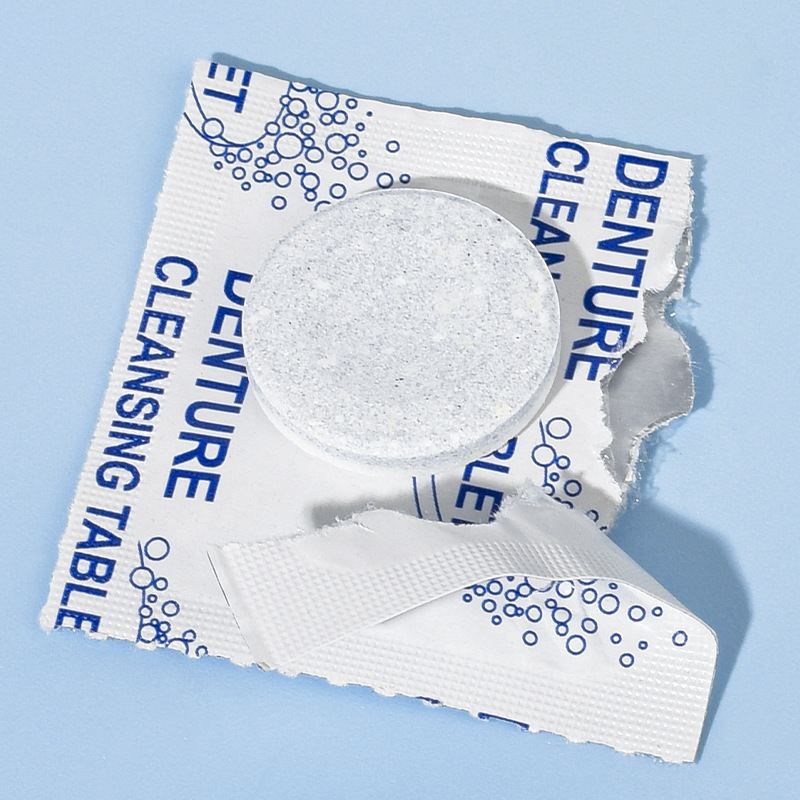
Denture cleansing tablets are compressed powder units that react with water to create an antiseptic solution, specifically engineered to clean porous prosthetic materials without scratching them.
The Composition and Purpose
At a fundamental level, these tablets are chemistry in action. Unlike toothpaste, which relies on mechanical scrubbing (abrasion), tablets rely on chemical reactions. When we manufacture these at our facility, we compress specific ratios of oxidizers and effervescent agents. The goal is to create a solution that can penetrate the microscopic pores of acrylic and metal dentures.
For a B2B buyer, understanding this distinction is vital. You are not selling a “brushing aid”; you are selling a “soaking solution.” This distinction allows you to market the product as a time-saver. The user drops the tablet in, and the chemistry does the work. This convenience is the primary driver for sales in this category.
Why They Dominate the Global Market
Tablets have become the standard format for denture hygiene globally. Why? Logistics and stability.
- Shelf Life: Tablets are dry and stable. They have a longer shelf life compared to gels or pastes, which is ideal for bulk shipping and warehousing.
- Dosage Control: Each tablet is a pre-measured dose. This eliminates waste for the end-user and ensures they use the correct amount of cleaning agent every time.
- Cost-Effectiveness: For private label brands, tablets offer a high perceived value to the customer while remaining cost-effective to manufacture and package.
When we discuss inventory with our partners, we emphasize that tablets are the “low maintenance” high-turnover item in the dental aisle. They are easy to ship, easy to store, and easy to sell.
Comparison to Traditional Methods
Many new denture wearers try to use regular toothpaste. This is disastrous for the denture. Denture acrylic is softer than natural enamel. Toothpaste contains abrasives like silica that scratch the denture. These scratches become breeding grounds for bacteria. By offering tablets, you provide a solution that protects the expensive investment of the denture itself. This protection angle is a powerful marketing tool for clinics and pharmacies.
How Do Denture Cleansing Tablets Work?
If you cannot explain the mechanism of action to your clients, you cannot justify the price point. Understanding the “fizz” helps you sell the science behind the product.
These tablets work through a process called effervescence and oxidation, where releasing oxygen bubbles physically lifts debris while chemical agents neutralize bacteria and fungi.
The Mechanics of Effervescence
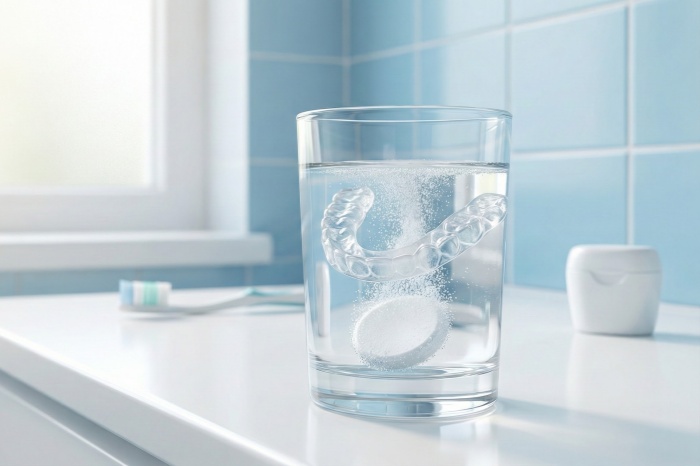
The moment the tablet hits the water, a reaction occurs between an acid (usually citric acid) and a base (usually sodium bicarbonate). This creates carbon dioxide gas—the bubbles.
For the end-user, this looks like a satisfying fizz. For the scientist, this is mechanical agitation. These micro-bubbles form rapidly on the surface of the denture. As they expand and rise, they physically dislodge food particles and plaque from the intricate crevices of the appliance that a toothbrush cannot reach.
The Power of Oxidation
The cleaning power comes from the oxidizers (like potassium monopersulfate). These ingredients release active oxygen. This oxygen attacks the cell walls of bacteria and breaks down the molecular bonds of stains (tea, coffee, tobacco).
- Bleaching Action: Mild bleaching agents whiten the denture teeth without damaging the pink acrylic base.
- Biofilm Disruption: The chemical solution penetrates the biofilm (the slime layer of bacteria) and breaks it apart.
Why Soaking Beats Brushing
We often tell our distributors that “soaking is superior to scrubbing.” Brushing relies on user technique. If the user has poor dexterity (common in elderly populations) or misses a spot, the bacteria remain. Soaking submerges the entire appliance. The solution touches every surface—inside the clasps, between the teeth, and along the gum line.
The Science of Cleaning:
| Mechanism | Action | Benefit for User |
| Effervescence | CO2 Bubble release | Lifts debris from hard-to-reach areas. |
| Oxidation | Active Oxygen release | Kills bacteria and whitens stains. |
| Alkalinity | pH adjustment | Neutralizes acids that cause bad odors. |
| Surfactants | Surface tension reduction | Allows water to penetrate microscopic pores. |
For a commercial buyer, knowing this helps you select high-quality formulas. A tablet that does not fizz or dissolve completely is a sign of poor manufacturing compression or moisture contamination.
What Ingredients Are Commonly Used in Denture Cleansing Tablets?
Ingredients dictate the safety certification and import duties of your product. Knowing what is inside the tablet protects your business from regulatory issues and customer complaints.
Common ingredients include sodium bicarbonate for fizzing, potassium monopersulfate for cleaning, citric acid for activation, and essential oils for flavor.
The Core Cleaning Agents
When we formulate products at ITS Dental Care, we balance efficacy with safety. The primary cleaner is usually an oxidizing agent.
- Potassium Monopersulfate: This is a non-chlorine oxidizer. It is powerful against organic stains and bacteria but is generally safer for the denture material than harsh bleach.
- Sodium Perborate: Another source of active oxygen. It helps in bleaching stains.
The Effervescent Pair
As mentioned, the fizz comes from combining:
- Sodium Bicarbonate (Baking Soda): It also acts as a mild abrasive and odor neutralizer.
- Citric Acid: When wet, it reacts with the soda to create bubbles.
Enzymes and Surfactants
High-end tablets often include enzymes (like proteolytic enzymes). These biological catalysts break down proteins—specifically food residues and saliva proteins that stick to the denture. Surfactants (like Sodium Lauryl Sulfate) lower the surface tension of the water. This makes the water “wetter,” allowing it to slide into tight spaces rather than beading up on the surface.
Flavor and Color
- Peppermint/Spearmint Oil: Leaves a fresh taste.
- Blue/Green Dye: This is a visual indicator. The water changes color to show the tablet is active, and often fades when the cleaning is done, acting as a timer.
Ingredients to Watch Out For
For sensitive markets or specific medical regulations (like the EU MDR), you need to be aware of persulfates. While effective, a small percentage of the population is allergic to persulfates. As a buyer, you might consider offering “Persulfate-Free” options to cater to sensitive users. Also, avoid tablets with high concentrations of chlorine bleach, as this can whiten the pink gum portion of the denture, leading to returns.
Benefits of Using Denture Cleansing Tablets
Why should your retail partners give shelf space to this product? The answer lies in the massive improvement it brings to the quality of life for the end consumer.
The main benefits are superior plaque removal (99.9% bacteria kill rates), non-abrasive stain removal, prevention of denture stomatitis, and significantly improved breath.
Oral Health and Hygiene
The biggest selling point is health. Dirty dentures cause Denture Stomatitis, a painful fungal infection (thrush) in the mouth. It causes red, inflamed gums. Using tablets daily kills Candida albicans, the fungus responsible for this. For nursing homes and hospitals purchasing in bulk, this is a risk management tool. Reducing infections means fewer doctor visits and antibiotic prescriptions for residents.
Aesthetic Maintenance
Nobody wants yellow teeth. Dentures absorb color from coffee, wine, and curry. Tablets use chemical bleaching to restore the original color.
- Stain Removal: Frequent use prevents stains from becoming permanent.
- Odor Control: The porous nature of dentures traps odors. Tablets neutralize the volatile sulfur compounds that cause bad breath.
Protection of the Prosthesis
We cannot stress this enough: Dentures are expensive custom devices. Using regular toothpaste creates micro-scratches. These scratches make the denture look dull and allow it to get dirty faster in the future. Tablets are non-abrasive. They clean without scratching. This extends the life of the denture, which is a value-add you can communicate to your customers.
Versatility
These tablets are not just for full dentures. They are effective for:
- Partial dentures (metal and acrylic).
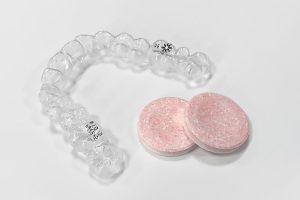
- Orthodontic retainers (clear aligners).
- Night guards for grinding.
- Sports mouthguards.
This expands your target market from just “seniors” to teenagers and athletes, increasing the total addressable market for your private label brand.
How to Use Denture Cleansing Tablets Correctly
User error is the number one reason for product dissatisfaction. Clear instructions on your packaging will reduce complaints and ensure your customers get the best results.
The correct process is simple: Rinse the denture to remove loose food, soak it in warm (not hot) water with a tablet for the specified time, and rinse thoroughly before wearing.
Step-by-Step Guide for Packaging
If you are designing the box for your brand, ensure these steps are visualized clearly:
- Prepare: Remove the denture and rinse it under running water. This washes away loose food particles so the tablet can focus on the stuck-on grime.
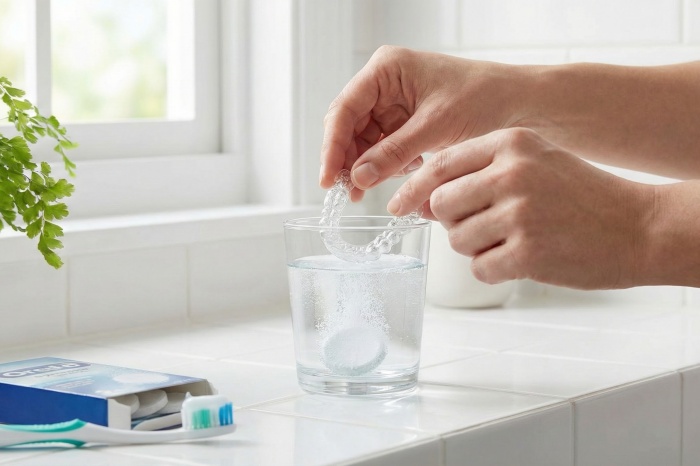
- Dissolve: Place one tablet into a glass or denture bath. Add enough warm water to fully cover the denture.
- Critical Note: Never use boiling water. Boiling water can warp the plastic of the denture, ruining the fit.
- Soak: Place the denture in the solution. The soaking time depends on the formula (usually 3 minutes, 15 minutes, or overnight).
- Brush (Optional but Recommended): For the best results, brush the denture gently with the solution using a soft denture brush.
- Rinse: Rinse the denture thoroughly under running water. You do not want to put cleaning chemicals directly into the mouth.
- Discard: Throw away the used solution. It does not work a second time.
Frequency of Use
“How often?” is the most common question. The answer is daily.
Bacteria grow back immediately. Daily soaking prevents the buildup of tartar (hardened plaque) that tablets cannot remove. Once tartar forms, the user needs a professional ultrasonic cleaning. Daily use maintains the product, ensuring the user buys your tablets regularly—creating a steady revenue stream for your business.
Common Mistakes
- Swallowing the solution: Packaging must clearly state “Do Not Drink.”
- Using hot water: Warps the denture.
- Soaking too briefly: Does not allow the chemistry to kill the bacteria.
Denture Cleansing Tablets vs Other Denture Cleaning Methods
To sell effectively, you must position tablets against the alternatives. You need to show why tablets are the professional choice compared to home remedies or expensive gadgets.
Tablets offer the best balance of affordability, efficacy, and safety compared to the abrasiveness of toothpaste or the high cost of ultrasonic machines.
Tablets vs. Denture Toothpaste
Denture toothpaste is a viable product, but it is manual. It requires dexterity.
- Pros of Toothpaste: Mechanical scrubbing feels “clean.”
- Cons: Can be too abrasive. Does not reach deep crevices.
- Winner: Tablets are better for disinfection; toothpaste is good for surface polishing. Ideally, they are used together, but if choosing one, tablets provide better hygiene.
Tablets vs. Soap and Water
Many patients use mild dish soap.
- Pros: Cheap and available.
- Cons: Does not kill bacteria. Does not whiten stains. It only removes grease.
- Winner: Tablets. Soap cleans; tablets sanitize. In a post-COVID world, “sanitization” is a much stronger selling proposition.
Tablets vs. Ultrasonic Cleaners
Ultrasonic baths use sound waves to clean.
- Pros: Very effective at dislodging debris.
- Cons: Expensive hardware. Still requires water and often a cleaning solution (tablet) to be effective.
- Winner: Tablets are the recurring consumable. Even if a user buys an ultrasonic machine, they usually add a tablet to the water for chemical cleaning. You can sell tablets to ultrasonic users.
The Dentist’s Recommendation
Dental professionals overwhelmingly recommend soaking. It is a passive activity that guarantees contact time with the cleaning agent. By stocking tablets, you align your inventory with professional dental advice, which builds trust with your B2B clients.
| Method | Antibacterial? | Whitening? | Non-Abrasive? | Cost |
| Tablets | Yes | Yes | Yes | Low |
| Toothpaste | No | Minimal | No | Low |
| Soap | No | No | Yes | Very Low |
| Ultrasonic | No (unless added) | No | Yes | High |
Who Should Use Denture Cleansing Tablets?
Identifying the target demographic helps you market the product. While seniors are the core, the user base is wider than you think.
Primary users are elderly denture wearers, but the market includes younger people with retainers, sports guards, and partial dentures.
The Elderly and Care Facilities
This is the volume buyer. Nursing homes, assisted living facilities, and geriatric wards need these in bulk.
- Pain Point: Caregivers are busy. They need a quick, effective way to clean residents’ dentures without spending 10 minutes brushing each one.
- Solution: Tablets allow for a “soak and go” workflow.
Orthodontic Patients (Teens and Adults)
The clear aligner market (Invisalign, etc.) is exploding.
- Pain Point: Clear aligners get cloudy and smell bad very quickly.
- Solution: Denture tablets are perfectly safe for clear aligners. This opens up a younger demographic for your product. You can re-brand the same tablet formula as “Retainer Cleaner” to capture this market segment.
Partial Denture Users
Many people in their 40s and 50s wear partials. They still have natural teeth.
- Importance: If the partial denture is dirty, it will infect the remaining natural teeth, causing more tooth loss. Hygiene is critical for this group to save their remaining teeth.
Institutional Buyers
- Hospitals: For patient stays.
- Dental Clinics: To give as “starter packs” to new denture patients.
- Pharmacies: For retail shelves.
At ITS Dental Care, we supply all these sectors. Understanding who consumes the product helps us design the right packaging size—from 30-count boxes for retail to 1000-count bulk sacks for institutions.
How to Choose the Right Denture Cleansing Tablets
Not all tablets are created equal. As a procurement officer, you need to look at specs, certification, and customization options.
Key factors for selection include cleaning speed (3-minute vs. overnight), certifications (FDA, CE, ISO), formula sensitivity, and packaging options.
Fast-Clean vs. Overnight Formulas
You need to offer variety.
- 3-Minute Rapid Clean: Targeted at active users who want a quick freshen-up before dinner. High effervescence, stronger concentration.
- Overnight Whitening: Targeted at users who take teeth out at night (which is recommended). Slower release, deep stain removal.
Safety and Compliance
This is non-negotiable for B2B.
- ISO 13485: Does the factory have medical device quality management?
- FDA/CE: Is the product registered?
- Material Safety: Are the ingredients traceable?Buying cheap, unregulated tablets puts your company at risk of liability if a user has a reaction. Always ask for the MSDS (Material Safety Data Sheet) and compliance certificates.
Scent and Flavor
Regional preferences matter.
- Europe/USA: Mint is king. It signals “clean.”
- Asia: sometimes prefers milder or fruitier scents.
- Unflavored: Crucial for users who want to avoid any chemical aftertaste.
Private Labeling (OEM/ODM)
If you are looking to build your own brand, look for a manufacturer that offers:
- Flexible MOQs: Can you start small?
- Packaging Design: Can they help with the artwork?
- Formula Customization: Can they create a “purple tablet” or a “green tablet” to make your brand unique?
We specialize in helping partners navigate these choices. We don’t just sell you a box; we help you build a product line that fits your specific market needs.
Final Thoughts: Are Denture Cleansing Tablets Worth It?
Skipping on high-quality denture cleaners is a false economy. The benefits of customer satisfaction and repeat business far outweigh the cost.
Yes, they are the industry standard for a reason: they provide the consistent, high-level hygiene that mechanical brushing cannot achieve alone.
Summary of Value
For the consumer, tablets offer a simple, low-effort way to keep their smile bright and healthy. For the B2B buyer, they represent a consumable product with high repeat purchase rates. Once a user finds a brand they trust, they buy it every month for the rest of their life.
The Winning Strategy
Don’t just sell dentures; sell the care routine. Bundle tablets with denture boxes and brushes.
We encourage you to reach out to us. Whether you need a container load of generic tablets or a custom formulation for your private label, ITS Dental Care has the expertise to deliver. Let’s discuss how we can improve your dental category margins today.
Conclusion
Denture cleansing tablets are essential for oral hygiene and a profitable asset for medical suppliers. They offer safe, chemical cleaning that brushing misses. Partnering with a reliable manufacturer ensures you deliver safety and efficacy to your market.
You may also interested in: